Nagaland and the Northeast in 7 Days: A Practical Itinerary
- Nagaland
- Kohima
- Hornbill Festival
- Itinerary
Seven days in Nagaland and the Northeast fits four nights around Kohima — the war cemetery, Khonoma and Kisama — followed by Kaziranga in Assam. Here is a day-by-day plan with realistic drive times.
Seven days in Nagaland and the Northeast is ideal for four nights around Kohima — the war cemetery, the green village of Khonoma and the Naga Heritage Village at Kisama — and two nights in Kaziranga in Assam for rhino safaris. Go between October and April, and plan for early December if you want the Hornbill Festival.
The Northeast is beautiful but slow to travel: hill roads, permits, festival crowds and early sunsets all shape the day. This itinerary uses realistic drive times, explains the permit, and suggests what to cut and how to adapt the route for families, couples and travellers with parents.
The route at a glance
| Day | Base | Plan |
|---|---|---|
| 1 | Kohima | Fly to Dimapur, drive to Kohima (about 3 hours) |
| 2 | Kohima | War Cemetery, state museum, local market |
| 3 | Kohima | Khonoma village and its forts and terraced fields |
| 4 | Kohima | Kisama Heritage Village or Hornbill Festival day |
| 5 | Kaziranga | Drive to Kaziranga in Assam (about 4–5 hours) |
| 6 | Kaziranga | Morning and afternoon jeep safaris |
| 7 | Home | Drive to Jorhat or Guwahati for the flight |
Days 1–2: Kohima
Day 1. Fly to Dimapur, which has connections from Kolkata, Guwahati, Delhi and other cities, and drive up to Kohima. The road climbs through forested hills, and the capital sits at around 1,400 metres, so evenings are cool.
Day 2. The Kohima War Cemetery marks one of the decisive battles of the Second World War in 1944, fought around the district commissioner's bungalow and its tennis court. Visit the Nagaland State Museum for an introduction to the Naga tribes, and walk through the local market, where you will see unusual produce and the fiery raja mircha chilli.
Day 3: Khonoma
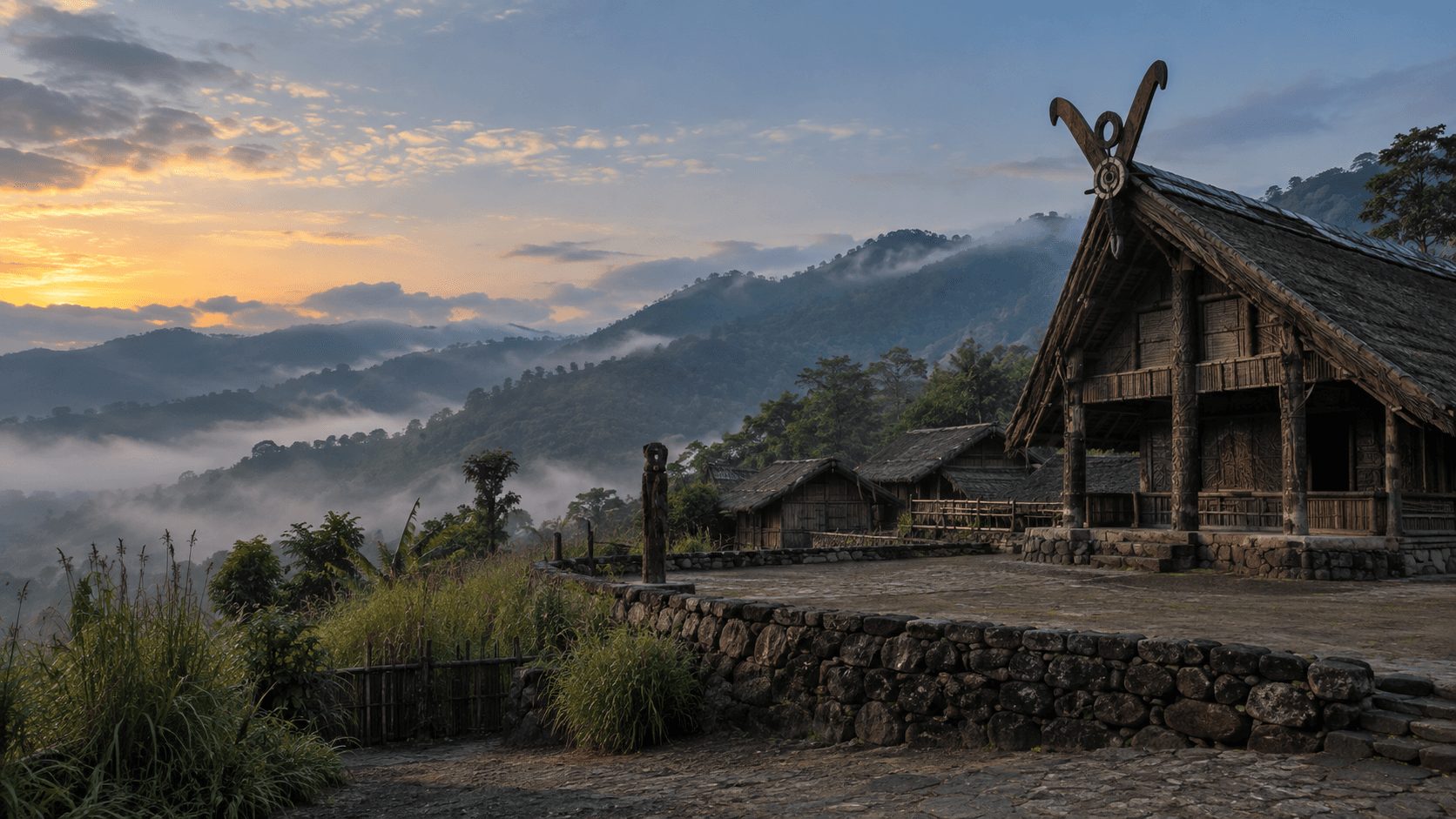
Khonoma, about 20 kilometres from Kohima, is an Angami village known for its terraced fields, stone gateways and community conservation, which earned it the name of India's first green village. Walk with a local guide to understand the village's history and its resistance to the British in the nineteenth century. Some families offer simple homestays if you want to stay overnight.
Day 4: Kisama and the Hornbill Festival
The Naga Heritage Village at Kisama, about 12 kilometres from Kohima, has traditional houses called morungs built by each of the major tribes. In early December, it hosts the Hornbill Festival, with dances, songs, crafts, food stalls and games over several days. Outside the festival, Kisama is quiet and worth a short visit. If you are fit, replace this day with a trek into the Dzükou Valley, which needs an early start and a guide.
Our Hornbill Festival trip combines festival days with village visits and comfortable stays, arranged ahead of the December rush.
Days 5–7: Kaziranga
Drive down from the hills to Kaziranga National Park in Assam, a UNESCO World Heritage Site and home to the largest population of one-horned rhinoceros in the world. Spend day six on morning and afternoon jeep safaris in different ranges; the Central and Western ranges are popular for rhinos, wild buffalo, deer and birds. On day seven, drive to Jorhat, about two hours away, or to Guwahati, about five hours, for your flight home. The park usually opens for safaris from around October or November to April or May, closing in the monsoon.
Where to stay
| Base | Stay near | Why |
|---|---|---|
| Kohima | The town centre or near Kisama | Short drives to the cemetery and festival |
| Khonoma | A village homestay | Simple rooms and local meals |
| Kaziranga | Kohora, near the Central range | Early safari starts |
Getting there and around
Dimapur is the nearest airport and railhead for Kohima. Within Nagaland, a private car with a local driver is essential, as public transport is limited and hill roads can be slow. Plan for early starts, because daylight ends early in winter. Guwahati has the most flights home, while Jorhat is closer to Kaziranga.
Food along the route
Naga food is distinctive, built on smoked pork, bamboo shoot, axone (fermented soybean) and fiery chillies. Vegetarians can eat rice, boiled vegetables, dal, chutneys and galho, a rice porridge that can be made without meat; ask for it in advance. Kohima has restaurants serving North Indian and vegetarian food, and Assam offers more vegetarian options, including Assamese thalis. Jain travellers should carry some snacks and inform hotels ahead.
Why this order works
Going up into the hills first gives you cooler days and the cultural part of the trip while you are fresh. Kaziranga comes last, closer to the airports in Assam, so you do not need to drive back up to Dimapur.
Timing this route
October to April is the dry season. December brings Hornbill, cold nights and full hotels, so book three to six months ahead. March and April are pleasant and quieter. The monsoon from June to September brings landslides and road closures in the hills, and Kaziranga is closed for safaris.
What to cut if you are short on time
With five days, keep Kohima, Khonoma and Kisama and skip Kaziranga. Or keep Kohima for two nights and Kaziranga for two. Do not try to add Mon, the Konyak heartland, without extra days, as it is a long drive.
Variations for families and parents
Children enjoy the safaris and the festival dances. For parents, choose hotels with heating in winter, keep drives in daylight, and skip the Dzükou trek. Kisama involves walking on slopes and steps, so plan rest breaks.
For couples
Couples often enjoy a homestay night in Khonoma, the quiet terraces in the morning mist, and a stay in a tea-estate bungalow in Assam on the way home.
With an extra day or two
An extra day lets you add the Dzükou Valley trek as well as Kisama, or a slower day in Khonoma. With two or three more days, continue from Kaziranga to Majuli, the large river island in the Brahmaputra known for its satras, the monasteries of Assamese Vaishnavism, and its mask-making traditions; it is reached by ferry from near Jorhat. Alternatively, add Shillong and Cherrapunji in Meghalaya before flying home from Guwahati.
Planning your Hornbill days
Hornbill programmes usually run from late morning into the afternoon at Kisama, with night markets and concerts in Kohima in the evenings. Two festival days are enough for most travellers: one for the main arena and morungs, and one for food stalls, crafts and photography. Traffic between Kohima and Kisama can be heavy, so leave early and agree a pickup point with your driver.
Practical tips
Many shops and restaurants close on Sundays in Nagaland, so plan meals and shopping accordingly. Ask before photographing people, especially elders in traditional dress. Carry cash, since ATMs can run dry during the festival, and keep a power bank for long drives.
Budget and packing
Spend on a reliable driver, a guide in Khonoma and good safari slots in Kaziranga. Pack warm layers, a jacket, comfortable walking shoes and a torch. Before you book, read our Nagaland planning guide and best time to visit Nagaland.
A BagPackerMe planner can arrange this week privately, with one named planner, WhatsApp support throughout and vegetarian and Jain food planned in.
Your questions, answered
Do Indian travellers need a permit for Nagaland?
Yes. Indian citizens from outside the state need an Inner Line Permit, which can be applied for online through the official Nagaland ILP portal. Foreign nationals follow separate registration rules.
When is the Hornbill Festival?
The Hornbill Festival is held at the Naga Heritage Village in Kisama, near Kohima, in the first days of December each year. Confirm the dates with Nagaland Tourism before booking, as hotels fill months ahead.
Is Nagaland suitable for vegetarians?
It needs planning. Naga cooking centres on pork, smoked meats and fermented ingredients, but rice, boiled greens, chutneys and dal are available, and Kohima has restaurants serving Indian vegetarian food. Tell hotels in advance.
How long is the drive from Dimapur to Kohima?
Allow roughly two and a half to three and a half hours, depending on road work and traffic. Leave early in the day, as hill roads are slower after dark.
Join Our Newsletter
Get destination guides, tips, and inspiration delivered straight to your inbox.
Plan it privately
Hornbill, Kohima and Kaziranga
We arrange the permits, drives, festival days, village visits and comfortable stays, with vegetarian meals planned in.
Written by
BagPackerMe Editorial Team
Read More
Continue exploring
Nagaland and the Northeast GuidesOctober 16, 2026•6 min read
Nagaland and the Northeast Trip Planning Guide: Routes, Seasons and Stays
Nagaland is best known for the Hornbill Festival, but its villages, landscapes and Naga cultures reward visitors year-round. Here is who it suits, how many nights, the best months, permits, how to reach and a sample route.
Nagaland and the Northeast GuidesOctober 20, 2026•5 min read
Best Time to Visit Nagaland and the Northeast: Month-by-Month
Nagaland and the Northeast are best from October to May, with the Hornbill Festival in December and clear skies in autumn. Here is a month-by-month guide to weather, festivals and the best months by travel style.
 Kolkata and West Bengal Guides
October 23, 2026•6 min read
Kolkata and West Bengal in 7 Days: A Practical Itinerary
Seven days in West Bengal works well as three nights in Kolkata, two in Murshidabad and two in a heritage rajbari or Shantiniketan. Here is a day-by-day plan with realistic drive times.