Nagaland and the Northeast Trip Planning Guide: Routes, Seasons and Stays
- Nagaland
- Hornbill Festival
- Kohima
- Khonoma
- Northeast India
Nagaland is best known for the Hornbill Festival, but its villages, landscapes and Naga cultures reward visitors year-round. Here is who it suits, how many nights, the best months, permits, how to reach and a sample route.
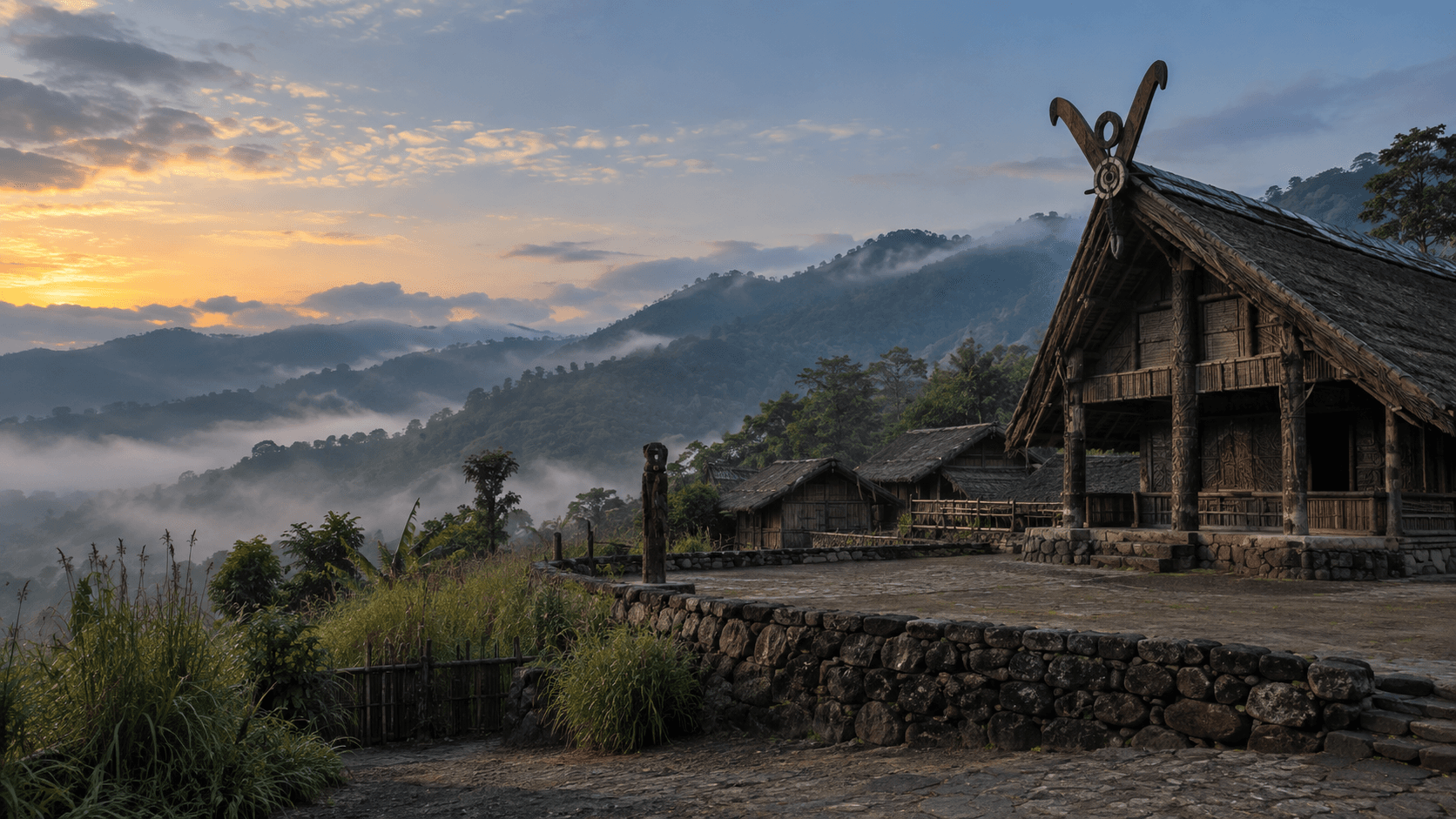
Nagaland is one of India's most distinctive destinations, home to many Naga tribes with their own languages, crafts, songs and traditions, set among forested hills and terraced valleys. Most visitors come for the Hornbill Festival, held every year from 1 to 10 December near Kohima, but villages such as Khonoma, the Dzükou Valley and the state's warm hospitality reward travellers at any time from October to May. Plan four or five nights, arrange your Inner Line Permit before travel, and book December stays months ahead.
Nagaland is very different from mainland India in food, culture and pace, which is a big part of its appeal. This guide covers who Nagaland suits, the festival, the main places, when to go, permits, how to reach, food and a sample route.
Who Nagaland suits
- Culture seekers: traditional dances, songs, crafts and village life.
- Photographers: festival costumes, morungs (traditional dormitories), terraced fields and mountain light.
- Hikers: Dzükou Valley, Japfü Peak and village trails.
- Curious travellers: those who want something very different from the usual circuits.
- Food adventurers: smoked meats, fermented bamboo shoot and fiery chillies.
The Hornbill Festival
The Hornbill Festival, named after the bird revered in Naga folklore, brings together the state's major tribes at the Naga Heritage Village in Kisama, about 12 kilometres from Kohima. Each tribe has its own morung, and over ten days visitors see traditional dances, songs, games, crafts, archery, food stalls and the evening music events in Kohima. It is colourful, energetic and a rare chance to see many Naga cultures in one place. The festival is very popular, so accommodation, cars and guides must be booked well in advance.
Our Hornbill Festival trip combines festival days with village visits and comfortable stays, arranged ahead of the December rush.
The main places
| Place | Highlights | Nights |
|---|---|---|
| Kohima | Kohima War Cemetery, the state museum, the market, Hornbill evenings | 3 |
| Khonoma | Widely known as a "green village", with terraced fields, Angami culture, community conservation | 1 |
| Dzükou Valley | Rolling green valley on the Nagaland–Manipur border; seasonal flowers | 1–2 (trek) |
| Touphema and Kigwema | Village visits and homestays near Kohima | Day trips |
| Mokokchung and Mon | Ao and Konyak cultures, further from Kohima | 2–3 |
When to go
October to May is the main season, with clear skies from October to December and pleasant spring weather from March to May. December is the busiest month because of the Hornbill Festival. Winter mornings and evenings are cold in Kohima. The monsoon, from June to September, brings heavy rain and landslides on hill roads, though Dzükou Valley is lush and flowering in early summer. Smaller tribal festivals, such as Sekrenyi in February and Moatsü in May, offer more intimate experiences.
Permits
Indian citizens from outside Nagaland need an Inner Line Permit (ILP) to enter the state. Apply online through the official Nagaland ILP portal before you travel, carry printed copies and the ID used for the application, and check the current rules and validity on the portal. Requirements for foreign nationals are different.
How to reach
Dimapur has Nagaland's only airport and main railway station, with flights from Kolkata, Guwahati and other cities. From Dimapur, Kohima is roughly three hours by road on a winding highway. Guwahati in Assam has more flight connections and is about seven to eight hours' drive from Kohima. A private car with an experienced local driver is the best way to get around, as public transport is limited and roads are mountainous.
Food in Nagaland
Naga cuisine is simple, smoky and spicy. Smoked pork with bamboo shoot, axone (fermented soybean), and dishes cooked with the fiery raja mircha (king chilli) are signatures. Rice is the staple, and boiled vegetables and herbs accompany most meals. Vegetarians will find options limited outside Kohima's hotels and cafés; let your hosts know in advance, and carry familiar snacks for long drives. At the festival, food stalls offer tasting portions of many tribal dishes.
A sample five-night route
| Nights | Base | Highlights |
|---|---|---|
| 1 | Dimapur or Kohima | Arrival, drive to Kohima, the War Cemetery at sunset |
| 2–4 | Kohima | Hornbill Festival days at Kisama, evening music in town, a day trip to Khonoma |
| 5 | Kohima or Dimapur | The local market, village visit, return for departure |
With more time, add Kaziranga National Park in Assam for rhinos and elephants, about five to six hours from Kohima.
Trekking in the Dzükou Valley
The Dzükou Valley, on the border of Nagaland and Manipur, is one of Northeast India's most beautiful treks. From the trailheads at Viswema or Zakhama, a steep climb leads to rolling green hills covered in dwarf bamboo, with streams winding through the valley floor. In June and July, the valley blooms with the rare Dzükou lily, and in winter the hills turn golden. Most hikers stay overnight in the basic rest house or in tents; carry warm layers, food and water, and go with a local guide.
For a gentler experience of Naga culture outside the festival, spend a night in a village homestay in Khonoma or Touphema. Hosts often share stories of clan history, traditional farming and the community conservation that protects nearby forests and wildlife.
Respectful travel
Nagaland's communities are welcoming, and respect goes a long way. Ask permission before photographing people, especially in villages and during rituals. Dress modestly and follow your guide's advice on local customs. Sundays are observed as a day of rest and worship by many Nagas, and many shops and services close. Support community-run homestays and buy crafts directly from makers.
If you are travelling with older parents, keep to Kohima and nearby villages, choose hotels with car access, and plan festival visits for the quieter morning hours.
Practical tips
- Carry warm layers in winter and rain gear in the monsoon.
- Keep printed ILP copies and ID with you at all times.
- Carry cash; ATMs and card acceptance are limited outside towns.
- Mobile connectivity can be patchy in remote areas.
Nagaland is one of India's most rewarding destinations for curious travellers; our guide to finding travel experiences off the usual itinerary has more ideas. With one named planner and WhatsApp support throughout, your permits, drivers and festival stays are arranged well ahead of the December rush.
Your questions, answered
When is the Hornbill Festival?
The Hornbill Festival is held every year from 1 to 10 December at the Naga Heritage Village in Kisama, near Kohima. Book accommodation and transport months in advance, as Kohima fills up quickly.
Do Indian citizens need a permit for Nagaland?
Yes. Indian citizens from outside Nagaland need an Inner Line Permit (ILP) to visit. It can be applied for online through the official Nagaland ILP portal before travel; carry a printed copy and ID.
How many days are enough for Nagaland?
Four or five nights covers Kohima, the Hornbill Festival and nearby villages such as Khonoma. Add two nights for the Dzükou Valley trek, or combine Nagaland with Kaziranga in Assam.
How do you reach Nagaland?
Fly to Dimapur, Nagaland's only airport, or to Guwahati, then drive. Dimapur to Kohima takes roughly three hours by road. Dimapur is also the main railway station.
Join Our Newsletter
Get destination guides, tips, and inspiration delivered straight to your inbox.
Nagaland, privately planned
The Hornbill Festival, with local insight
Our Hornbill Festival trip pairs the festival at Kisama with village visits, local guides and comfortable stays arranged well ahead of the December rush.
Written by
BagPackerMe Editorial Team
Read More
Continue exploring
 Meaningful Travel
September 18, 2026•8 min read
How to Find Travel Experiences That Aren’t on Every Tourist Itinerary
A unique experience is not automatically the least-known one or the most expensive one. It is something with genuine local context, clear expectations and room to be present.
 Meaningful Travel
September 15, 2026•7 min read
21 Experiences Worth Travelling for in Your 20s and 30s
The trips that stay with you are rarely about collecting the most places. They make room for perspective, people, uncertainty and a more deliberate pace.
 Travel Confidence
July 22, 2026•6 min read
How to Make Friends While Travelling as an Adult
Adult friendship rarely begins with a perfect opening line. Travel can make connection easier because people are sharing a place, a task and a little more time than usual.