
The Best Heritage Hotels in Rajasthan: Living Like Royalty on Your Trip
- Rajasthan
- Heritage Hotels
- Luxury Travel
- India Programme
- Bespoke Travel
Photograph by Jainam Mehta on Unsplash
Curate an elite selection of restored forts and palaces across Jaipur, Udaipur, and Jodhpur that BagPackerMe features in its bespoke itineraries.
Rajasthan is a living history book, and choosing where you sleep transforms your journey from ordinary sightseeing into a tactile encounter with the erstwhile Rajputana. When you check into a heritage property, you are stepping behind thick lime-plastered walls, walking across courtyards designed for desert breezes, and staying in rooms once inhabited by maharajas, nobles, and courtiers. BagPackerMe designs private, bespoke itineraries across India for travellers in their twenties and thirties who want comfort matched with deep cultural immersion. Rather than standard business hotels, we weave historic havelis and palace resorts into your route to ensure your accommodation tells as much of a story as the monuments you visit.
The spectrum of heritage accommodation across Rajasthan is vast, ranging from world-renowned grand palaces to intimate boutique havelis restored by descendants of royal families. Understanding how these properties differ helps you curate an itinerary that balances majestic luxury with authentic local character. Whether you choose to base yourself in the Pink City of Jaipur, the lake-wrapped romantic avenues of Udaipur, or the stark, imposing blue lanes of Jodhpur, your choice of hotel sets the pacing and tone for every single day of your holiday.
Understanding Heritage Categories
Heritage hotels in India are officially classified by the Ministry of Tourism into distinct tiers—Heritage Grand, Heritage Classic, and Heritage Basic—based on when the building was constructed and how much of its original structure remains intact. Properties built between 1935 and 1950 qualify as Heritage Basic, while those constructed before 1935 fall into Classic and Grand categories, provided they have maintained their historical architectural integrity without aggressive modern additions.
At BagPackerMe, we primarily feature properties that fall into the Classic and Grand brackets for our luxury programmes, while curating charming havelis for travellers seeking intimate boutique experiences. A Heritage Grand hotel is typically a former royal residence or sprawling fort, such as Rambagh Palace in Jaipur or Umaid Bhawan Palace in Jodhpur, where expansive gardens, original marble colonnades, and museum-grade collections define your stay. Heritage Classic properties are often older noble mansions or fortified townhouses that offer rich fresco work, carved jharokhas, and courtyard dining spaces.
It is important to understand what a heritage classification means for your daily experience. Because these buildings are protected historical structures, room layouts are rarely uniform. You might find high ceilings, antique four-poster beds, and thick stone walls that keep rooms naturally cool, but you may also encounter winding staircases instead of spacious elevators or plumbing configurations that reflect creative retrofitting. For most travellers, this architectural quirkiness is part of the charm, but if you require predictable, modern, box-style hotel layouts, a heritage stay requires a mental shift.
Palaces of Jaipur
Jaipur offers some of the most dramatic heritage accommodations in the country, largely because the Pink City was designed around grand chowks and fortified gates that easily absorbed sprawling noble estates. Rambagh Palace, managed by the Taj Group, stands as the pinnacle of this experience. Spanning 47 manicured acres of ornamental Mughal gardens, it was the former principal residence of Maharaja Sawai Man Singh II and Maharani Gayatri Devi. Staying here places you amid peacocks roaming the lawns, historic dining rooms adorned with crystal chandeliers, and white-glove service that mirrors its royal lineage.
For travellers seeking a slightly more intimate scale without sacrificing majesty, The Raj Palace in Jaipur offers a compelling alternative. Originally constructed in 1727 AD, it functions as India's first museum hotel, featuring real gold leaf work and centuries-old crockery collections in its signature restaurant, Swapna Mahal. Meanwhile, properties like Samode Haveli and Alsisar Haveli offer quintessential mid-luxury boutique experiences. Samode Haveli, tucked away near the old city, features a serene courtyard pool, traditional Rajput architecture, and family-run hospitality that feels deeply personal.
When planning your Jaipur heritage stay through our best-time-to-visit-rajasthan guide, note that location dictates your daily mobility. Properties inside or immediately adjacent to the walled old city allow you to walk out directly into bustling bazaars and step inside Hawa Mahal within minutes. In contrast, sprawling palace resorts on the city outskirts require short taxi rides for sightseeing but reward you with total quiet, sprawling lawns, and unhurried evening dining under the stars.
Lakeside Sanctuaries in Udaipur
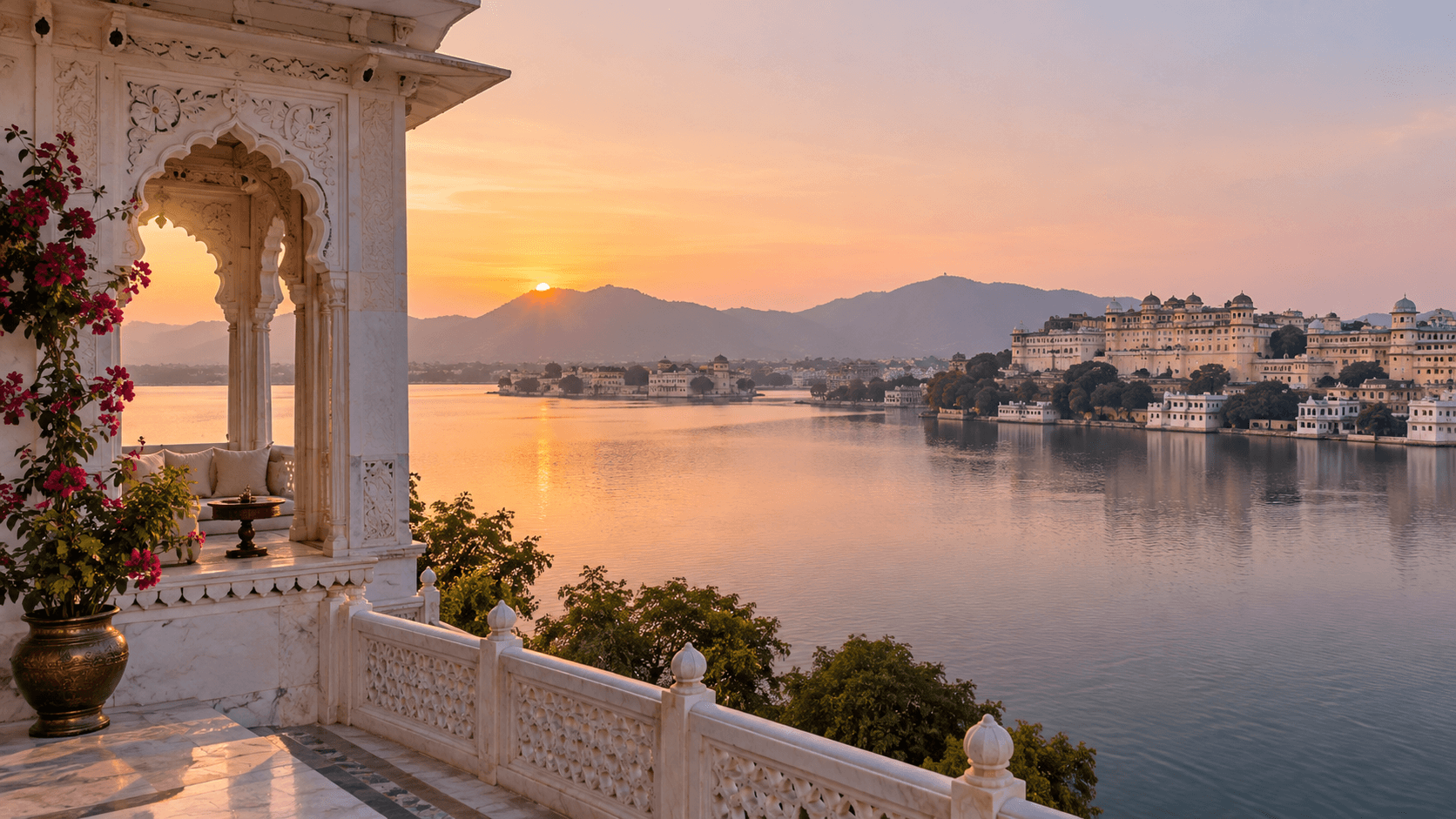
Udaipur’s heritage hotels make brilliant use of water and stone, taking full advantage of Lake Pichola and the surrounding Aravalli hills. The undisputed crown jewel here is the Taj Lake Palace, rising like a pristine white marble vision from the centre of the lake. Built between 1743 and 1746 by Maharana Jagat Singh II as a pleasure palace, guests arrive via a private motorized barge and are greeted with traditional drumbeats and rose petal showers on the arrival jetty.
Other stellar heritage choices in Udaipur include Shiv Niwas Palace and Fateh Prakash Palace, both situated within the grand City Palace complex itself. Staying within the palace walls gives you after-hours proximity to the courtyards and museums long after day visitors have departed. For travellers seeking boutique heritage charm on the lake's edges, properties like Jagat Niwas Palace Hotel and Amet Haveli provide exceptional sunset dining experiences overlooking the water at moderate luxury price points.
Udaipur’s heritage properties suit travellers who want a slower, more romantic pace. Mornings here are best spent sipping filter coffee on a stone terrace overlooking the lake traffic of wooden boats, while afternoons invite leisurely boat excursions or private craft workshops in the old lanes. Because Udaipur is compact compared to Jaipur, most heritage stays here put you within easy reach of art studios, silver smiths, and rooftop cafés.
Forts and Havelis of Jodhpur and Jaisalmer
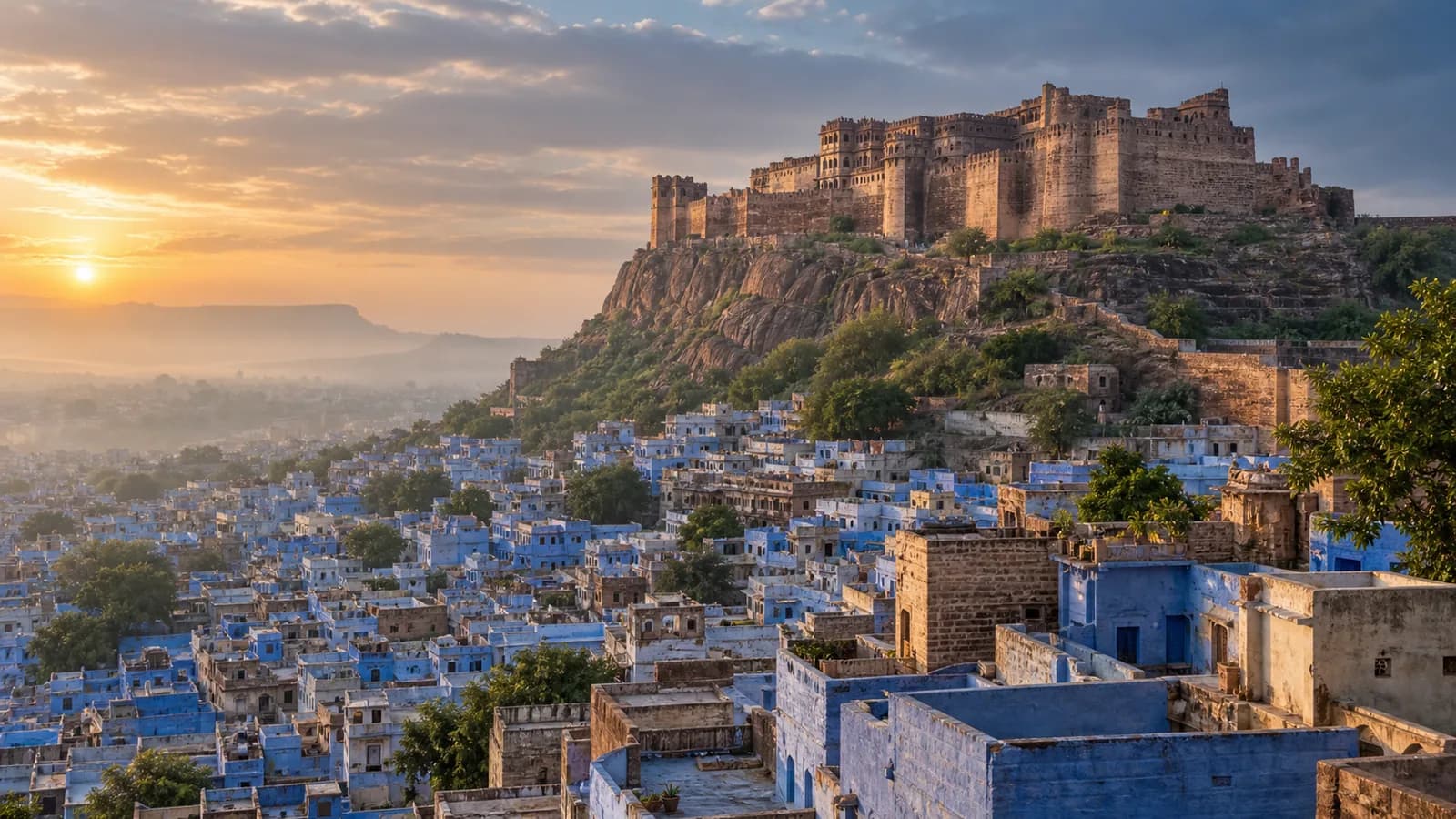
Moving west towards the Thar Desert, the architecture shifts from white marble and pink sandstone to rugged, defensive fortifications that command the horizon. In Jodhpur, RAAS Jodhpur offers a masterclass in adaptive reuse—a 300-year-old stepwell haveli sitting directly in the shadow of the colossal Mehrangarh Fort. Its minimalist, modern rooms contrast sharply with the ancient stone ramparts, giving you an unbeatable view of the Blue City from the infinity pool.
Further out in Jaisalmer, heritage properties like Hotel Rawalkot and Gorbandh Palace anchor themselves in the desert landscape, offering stone masonry, camel safari coordination, and rooftop dining overlooking golden dunes. Staying in these desert properties shifts the experience entirely towards starlit dinners, folk music performances, and excursions into the Sam sand dunes.
The primary consideration when choosing a desert heritage stay is climate control and dust management. Historic desert forts and havelis are built to withstand extreme heat and arid winds, but wind-blown sand can occasionally settle in open-air courtyards. BagPackerMe coordinates private transfers and expert local guides who understand how to navigate these remote properties seamlessly, ensuring your transition from city palace to desert fortress feels effortless.
Financial Breakdown of Royal Stays
Experiencing Rajasthan’s heritage hotels requires a clear understanding of pricing structures across different tiers. Luxury palace resorts operated by major hospitality brands typically range from ₹15,000 to ₹100,000+ per night, reflecting their expansive grounds, dedicated butler service, and historical significance. Mid-range heritage hotels and restored havelis generally fall between ₹5,000 and ₹25,000 per night, delivering authentic architectural beauty, carved balconies, and cultural atmosphere without ultra-luxury pricing.
| Accommodation Tier | Average Nightly Rate (INR) | Typical Amenities & Experience |
|---|---|---|
| Budget Heritage & Guesthouses | ₹1,000 – ₹4,000 | Clean rooms, family-run atmosphere, historic core locations |
| Mid-Range Boutique Havelis | ₹5,000 – ₹25,000 | Carved jharokhas, open courtyards, rooftop dining, local charm |
| Luxury Palace Resorts | ₹15,000 – ₹1,000,000+ | Extensive grounds, private pools, butler service, royal legacy |
When calculating your total trip budget, remember that accommodation is only one component. Domestic return flights from major Indian cities to Jaipur, Udaipur, or Jodhpur average ₹4,000 to ₹8,000 per person, while private chauffeur-driven cars run approximately ₹2,500 to ₹3,500 per day. A comprehensive 7-day luxury heritage itinerary across multiple cities generally totals ₹80,000 to ₹1,500,000 per person depending on whether you opt for top-tier palace suites or mix boutique havelis with occasional splurge nights.
Practical Planning and Common Mistakes
The most common mistake travellers make when booking heritage hotels in Rajasthan is treating them like standard business chain hotels. Because historic properties have a limited number of rooms—often ranging from 10 to 40 keys in boutique havelis—they book out months in advance during the peak winter season from November to February. Waiting until the last minute forces travellers to compromise on their preferred hotel or settle for inferior room categories overlooking internal walls rather than courtyards or lakes.
Another oversight is underestimating the weather and packing accordingly. While winter days are warm and pleasant, hovering between 20°C and 30°C, desert nights drop significantly, and stone-built palace rooms retain a deep chill after sunset. Packing warm layers for evening dining and early morning fort walks is essential. Additionally, travellers frequently make the mistake of packing too many destinations into a single week; trying to cover Jaipur, Jodhpur, Jaisalmer, and Udaipur in seven days leaves you spending more time checking in and out of hotels than actually enjoying the heritage atmosphere.
Finally, always confirm current amenities and operational details directly on official hotel websites before finalising your dates, as historic properties periodically undergo sensitive restoration work on frescoes, courtyards, or swimming pools. BagPackerMe handles these operational checks for every bespoke itinerary we curate, ensuring your stay unfolds without unexpected closures or logistical friction.
Frequently asked questions
What is the difference between a heritage hotel and a standard luxury hotel in Rajasthan?
A standard luxury hotel offers modern, uniform architecture and amenities built for contemporary convenience. A heritage hotel is a restored palace, fort, or noble haveli that preserves centuries-old stone walls, hand-painted frescoes, and original architectural quirks while integrating luxury service, offering an immersive connection to regional history.
When is the best time of year to stay in Rajasthan heritage hotels?
The best time to visit is from October to March, when daytime temperatures are comfortable and evenings are cool. November to February represents the peak tourist season with ideal weather for outdoor dining and sightseeing, while October and March offer pleasant conditions with slightly lower crowd levels.
How much should I budget per night for a heritage stay in Rajasthan?
Mid-range boutique heritage hotels and restored havelis typically cost between ₹5,000 and ₹25,000 per night. Ultra-luxury palace resorts and historic grand properties range from ₹15,000 to ₹100,000+ per night depending on the suite category and season.
Are heritage hotels suitable for travellers who prefer modern amenities?
Yes, top-tier heritage properties successfully blend historical grandeur with modern comforts such as high-speed Wi-Fi, air conditioning, and luxury spas. However, room layouts may vary due to ancient structural preservation, and elevators are sometimes replaced by historic staircases.
Join Our Newsletter
Get destination guides, tips, and inspiration delivered straight to your inbox.
Planned properly
Ready to experience royal Rajasthan?
Let our trip-planning studio craft a bespoke itinerary featuring Rajasthan's finest restored palaces and havelis, tailored entirely to your pace.
Written by
BagPackerMe Editorial Team
Read More
Continue exploring
 Rajasthan Guides
October 17, 2026•6 min read
Best Time to Visit Rajasthan: Month-by-Month Guide
Rajasthan is best from October to March, with warm days, cool nights and festivals. Here is a month-by-month guide to weather, crowds, prices and festivals, plus the best months by travel style.
Rajasthan GuidesOctober 27, 2026•6 min read
How Much Does a Rajasthan Trip Cost? Budget, Mid-Range and Luxury
A Rajasthan trip costs most in hotels — especially heritage palaces and havelis — and in a car and driver for the long distances between cities. Safaris, fort tickets and desert camps add the rest. Peak winter weeks and the Pushkar fair are the priciest. Here is how the budget breaks down.
 Rajasthan Guides
October 21, 2026•6 min read
Rajasthan in 7 Days: A Practical Itinerary
Seven days in Rajasthan covers Jaipur, Jodhpur and Udaipur, with a stop at the Ranakpur Jain temple. Here is a day-by-day route with realistic drive times, what to cut and variations for families, couples and wildlife lovers.