
Kerala Backwaters Beyond Alleppey: Quieter Alternatives
- Kerala
- Backwaters
- India Travel
- Sustainable Travel
- Slow Travel
Photograph by kyran low on Unsplash
Alleppey is crowded and increasingly disappointing. Discover Kumarakom, Kollam, Munroe Island and Kuttanad for a quieter backwater experience.
Alleppey is no longer the quiet idyll most travellers picture when they dream of Kerala. If you arrive expecting a private drifting journey past green paddy fields, you will likely find yourself stuck in a diesel-choked traffic jam of competing houseboats, all vying for the same narrow channels. For travellers in their twenties and thirties looking for genuine calm rather than industrial-scale tourism, the true magic of the backwaters lies further afield. You do not need to settle for congested waterways to experience the state's iconic aquatic ecosystem. Better answers exist across the 900-kilometre network of lagoons, rivers, and canals, and exploring them requires looking beyond the well-worn Alappuzha departure points.
Kumarakom and Vembanad Lake
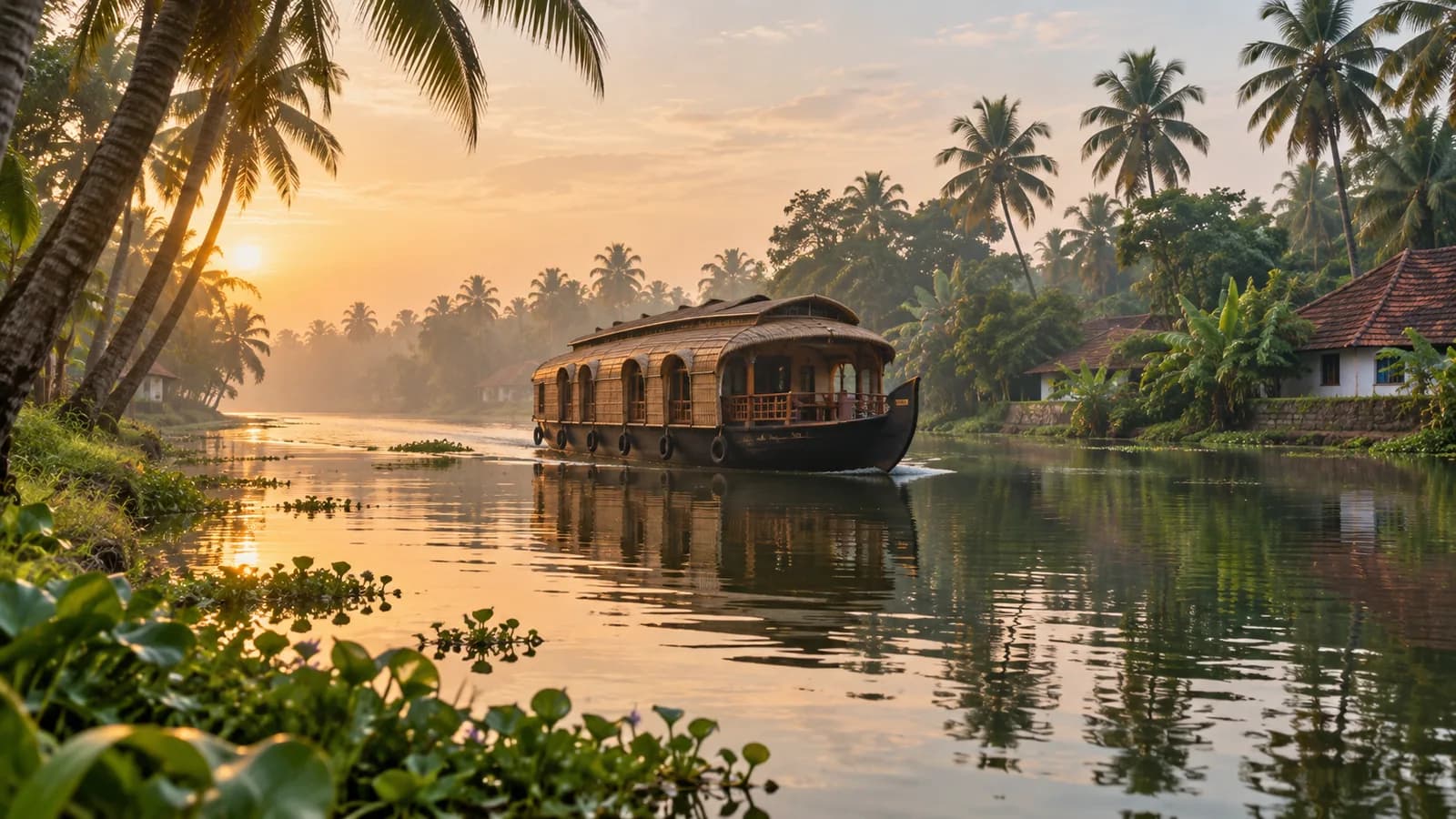
Kumarakom sits on the eastern banks of the massive Vembanad Lake, offering a much more spacious and refined backwater experience than its southern neighbour. While Alleppey forces boats into narrow, congested canals where engine noise bounces off concrete banks, Kumarakom opens out into the expansive waters of South Asia's longest lake. This Ramsar-designated wetland is an exceptional place for birdwatching, supporting populations of kingfishers, egrets, and migratory waterfowl. You can stay in lakeside heritage properties or quiet homestays that put you directly on the water without the constant hum of passing tourist traffic. The pace here is deliberately slower, suiting travellers who want to read on a veranda, watch local fishermen cast Chinese fishing nets, or take a morning canoe ride through narrower side creeks where large houseboats cannot physically fit.
When planning your time around Vembanad Lake, your choice of accommodation dictates your entire experience. Standard budget hotels in the region begin at roughly Rs 900 per night for a basic single room, while economy 3-star properties average Rs 1,431 for single occupancy and around Rs 3,863 for a double room with breakfast included. If you want to lean into the lakeside setting, premium backwater resorts scale upwards significantly, with top-tier luxury properties reaching Rs 32,000 per night. A standard Kerala holiday package that includes a brief houseboat stint can start from ₹2,293 per person, though comprehensive 4-to-5 day regional itineraries generally range from ₹14,616 to ₹15,575 per person for budget-focused group bookings. For a complete look at regional planning, consider reading our Kerala Trip Planning Guide to map out travel times between the coast and the inland lakes accurately.
Choosing Kumarakom over Alleppey suits travellers who value comfort, open horizons, and biodiversity over a non-stop parade of vessels. However, it is important to be realistic about the downsides. Kumarakom is not an untouched wilderness; luxury tourism has established a firm foothold here, and you will pay higher prices for waterfront rooms and curated excursions. It is also less suited for travellers seeking an ultra-budget backpacking trip, as public transport options are less integrated here than in the busier urban transit hubs. If you are travelling during peak months from November to February, you must secure your lakeside accommodation months in advance, as boutique properties have very limited inventory.
Munroe Island and Ashtamudi Lake
Further south in the Kollam district, Munroe Island and Ashtamudi Lake offer an entirely different scale of backwater exploration. Munroe Island is a cluster of eight small islands tucked where the Ashtamudi Lake meets the Kallada River, forming a tight lattice of narrow, palm-canopied canals. Because these waterways are too shallow and narrow for standard motor-powered houseboats, the only way to explore them is by small wooden canoe or kayak paddled by a local guide. This restriction keeps the tourism footprint remarkably light. You glide past single-storey pastel homes where daily life unfolds on stone river steps, old men harvest coir fibre from coconut husks, and children wave from wooden footbridges. It is arguably the closest you can get to the unvarnished rural rhythm of southern India.
Logistically, visiting Munroe Island is straightforward and exceptionally gentle on the wallet. Budget backwater homestays on the island start at about $20 per night, roughly ₹1,600, which typically includes home-cooked Keralan meals featuring fresh lake fish and local spices. Small-group canoe tours or solo kayak rentals cost very little compared to full-size boat charters. For travellers arriving from Kochi, you can combine your inland transit with the iconic 8-hour public tourist ferry that runs from Alleppey down to Kollam for a nominal 300 INR, offering a full day on the water before you settle into your island homestay. This route features heavily in our recommended Kerala in 7 Days itinerary, which balances transit days with slow exploration.
Munroe Island is ideal for solo travellers, couples, and small groups who want an active, low-impact connection with nature rather than passive luxury cruising. Yet the limitations must be stated plainly. Amenities on the island are basic; you will not find luxury spas, air-conditioned multi-course dining rooms, or vibrant nightlife here. Power outages can happen during severe weather, and during the monsoon months from June to September, rising water levels can temporarily flood low-lying paths and restrict canoe operations. If you require modern creature comforts and polished hospitality infrastructure, Munroe Island may feel too rustic for a multi-night stay, making a day trip from the nearby town of Kollam a more sensible compromise.
The Kuttanad Interior and Village Canals
Kuttanad is often called the rice bowl of Kerala, representing a fascinating agricultural landscape where farming takes place entirely below sea level behind massive earthen dykes. Exploring the Kuttanad interior means navigating a world of endless green paddies, elevated canal banks, and winding waterways that serve as the main street for local village communities. Unlike the wide, commercial thoroughfares of central Alleppey, the interior canals of Kuttanad are intimate and quiet. Here, you share the water only with local commuters, small fishing skiffs, and the occasional freight boat transporting harvested rice and coconuts. It is a striking landscape where engineering and traditional agriculture have coexisted for centuries.
To experience Kuttanad properly without contributing to the congestion of major tour operators, swap the traditional houseboat for a shared Shikara boat or a small motorized canoe arranged through a community-run cooperative. These smaller vessels can navigate shallow tributaries that larger boats cannot reach, allowing you to stop directly at village toddy shops to sample fresh palm wine and spicy local crab curry. A comfortable overall holiday budget for a couple exploring central Kerala regions like Kuttanad ranges between ₹30,000 and ₹60,000 per person for a week-long trip, factoring in private car hire for the roughly 100 kilometres of daily local transit that makes exploring dispersed rural jetties practical and comfortable.
Kuttanad suits curious food lovers and culturally minded travellers who want to step off the standard tourist track. However, be prepared for basic conditions. Village homestays in the agricultural interior are modest, and English proficiency among local boatmen may be minimal. Furthermore, visiting during the height of the summer months can be intensely humid and hot, as the open paddy fields offer very little natural shade once you leave the palm-fringed canal banks. You must pack light cotton clothing, adequate sun protection, and a healthy tolerance for rustic rural environments where amenities are straightforward rather than luxurious.
Houseboat Pollution and Choosing Responsible Operators
It is impossible to discuss Kerala's backwaters honestly without addressing the severe ecological crisis facing the waterways. The explosion of mass tourism, particularly around Alleppey and parts of Vembanad Lake, has inflicted heavy damage on the fragile wetland ecosystem. Hundreds of large houseboats churn through the narrow channels daily, dumping untreated sewage, greywater, and plastic waste directly into the fresh water. This pollution has depleted fish stocks, damaged aquatic plant life, and turned parts of the once-pristine network into murky, foul-smelling corridors. A holiday that claims to celebrate nature while patronising irresponsible operators actively contributes to the destruction of the very environment you came to see.
Choosing an operator who respects the ecosystem requires asking direct, uncompromising questions before you book any vessel. Verify whether the houseboat is fitted with modern bio-toilets and waste-treatment holding tanks rather than direct-discharge pipes that empty into the lakes. Look for operators who use silent electric motors or quieter four-stroke engines rather than outdated, rattling two-stroke diesels that deafen wildlife and leave heavy oil slicks on the water surface. Support eco-certified properties and community-managed cooperatives in places like Munroe Island and Kumarakom, where local residents have a vested financial and cultural interest in keeping their water clean. A responsible operator will be transparent about their waste management practices; if an agent brushes off your environmental questions, take your business elsewhere.
This approach requires extra effort and often a higher upfront cost, but it is the only way to travel sustainably in a region suffering from the pressures of overtourism. Travellers who choose the cheapest available houseboat online without checking reviews or environmental credentials are almost certainly funding operators who cut corners on waste disposal. If your budget is tight, opt for a public ferry, a non-motorised canoe tour, or a lakeside homestay instead of a cheap diesel houseboat. You will spend less money, enjoy a cleaner and quieter experience, and avoid participating in the ongoing degradation of God's Own Country.
Best Time to Visit and Seasonal Realities
Timing your backwater trip correctly determines whether your days are spent drifting under clear blue skies or sheltering indoors from torrential downpours. The most pleasant window to visit the Kerala backwaters runs from October through February, commonly referred to as the winter season. During these months, daytime temperatures are moderate, humidity drops significantly, and rainfall is rare. November to February offers the peak of dry, sunny weather, while October and March serve as excellent shoulder months that combine good weather with noticeably smaller tourist crowds. Mornings on the water during January can be refreshingly cool, making early canoe excursions particularly atmospheric.
For travellers who prefer lush landscapes and dramatic scenery over dry heat, the monsoon season from June to September offers a compelling alternative. During the rains, the backwaters burst into an intense, vibrant green, and the air cools down considerably. However, monsoon travel demands careful planning and flexibility. You must monitor local weather reports and flood alerts closely, as heavy monsoon downpours can cause water levels to surge, disrupt road transit to rural jetties, and occasionally prompt local authorities to suspend boat operations entirely. If you travel during this period, book flexible accommodation and avoid rigid itineraries that leave no room for weather delays.
Avoiding common planning mistakes will save you from frustration. Do not leave your high-season accommodation bookings to the last minute, as premium homestays and eco-lodges fill up months ahead. Communicate any dietary requirements or medical needs to your hosts before arrival, as rural backwater properties source fresh ingredients daily and cannot easily accommodate sudden requests. Finally, do not assume that every tour package labeled 'eco-friendly' adheres to strict environmental standards. Always cross-reference independent traveller reviews on platforms like TripAdvisor or specialized travel blogs to ensure the operator delivers on their sustainability promises before you transfer your non-refundable deposit.
Practical Planning, Costs, and Booking Terms
Planning a trip to the Kerala backwaters requires a clear understanding of financial commitments and commercial terms. For independent travellers, a comfortable 7-day holiday in Kerala costs approximately Rs 15,701 for a solo traveller and Rs 31,701 for two people sharing expenses, assuming a mix of economy hotels, public transit, and local dining. If you prefer the comfort of private car hire for local sightseeing—which we strongly recommend for navigating between rural backwater hubs—expect daily transport costs to average around ₹1,700 for roughly 100 kilometres of travel, complemented by standard economy hotel rates starting from Rs 900 to Rs 1,431 per night for single occupancy.
When booking private custom trips or curated group programmes through specialised operators, commercial terms must be clear from the outset. Our standard booking terms require a non-refundable deposit of 25-30% upon confirmation, with the remaining balance due 30 days before departure. If your plans change, cancellations made more than 45 days out result in the loss of your deposit only. Cancellations between 30 and 44 days before departure incur a 50% charge of the total booking value, dropping to 75% for cancellations made 15 to 29 days out. Any cancellation inside 15 days of departure forfeits 100% of the total cost. Reviewing these figures before committing ensures your travel planning remains transparent and stress-free.
Ultimately, trading the crowded corridors of Alleppey for the quieter waters of Kumarakom, Kollam, and Munroe Island transforms a potentially frustrating tourist trap into a deeply restorative journey. By choosing slow transport, supporting responsible local operators, and timing your visit to match your tolerance for weather and crowds, you experience the backwaters as they were meant to be: a serene, living ecosystem where water, land, and village life move together at an unhurried pace.
Frequently asked questions
Is Alleppey the only place to experience Kerala backwaters?
No. While Alleppey is the most famous departure point, the backwater network spans over 900 kilometres across Kerala. Excellent quieter alternatives include Vembanad Lake around Kumarakom, Ashtamudi Lake and Munroe Island near Kollam, and the agricultural interior canals of Kuttanad.
How much does a backwater trip in Kerala cost?
Costs vary depending on your travel style. Budget homestays on Munroe Island start at about $20 per night, public ferries cost a nominal 300 INR for long routes, and standard 3-star hotel rooms average between Rs 1,431 and Rs 3,863 per night. Comprehensive regional holiday packages generally range from ₹15,575 to ₹35,000+ per person depending on duration and inclusions.
When is the best time to visit the Kerala backwaters?
The most pleasant weather occurs between October and February, offering dry days, comfortable temperatures, and low humidity. November to February is the peak window. The monsoon season from June to September offers lush green scenery and fewer crowds, but requires flexibility due to heavy rainfall and potential flood alerts.
How can I avoid houseboat pollution and support sustainable tourism?
Avoid cheap, diesel-choking houseboats that discharge waste directly into the water. Instead, choose eco-certified operators with proper bio-toilets, opt for non-motorised canoe or kayak tours on Munroe Island, or stay at community-run lakeside homestays that actively protect their local ecosystem.
Join Our Newsletter
Get destination guides, tips, and inspiration delivered straight to your inbox.
Planned properly
Ready to experience the real Kerala backwaters?
We design private, tailor-made itineraries that take you far beyond the crowded tourist corridors into the quiet heart of Kerala.
Written by
BagPackerMe Editorial Team
Read More
Continue exploring
 Kerala Guides
October 14, 2026•6 min read
Kerala Trip Planning Guide: Routes, Seasons and Stays
Kerala rewards slow travel: backwaters, tea hills, beaches and some of India's best food. Here is who it suits, how many nights, the best months, how to reach, where to stay and a sample route.
Kerala GuidesOctober 21, 2026•6 min read
Kerala in 7 Days: A Practical Itinerary
Seven days in Kerala covers Kochi, the tea hills of Munnar, the spice gardens of Thekkady, a night on an Alleppey houseboat and a quiet beach. Here is a day-by-day route with realistic drive times and variations.
 Kerala Guides
October 17, 2026•5 min read
Best Time to Visit Kerala: Month-by-Month Guide
Kerala is pleasant from October to March, lush and restorative in the monsoon, and hot in April and May. Here is a month-by-month guide to weather, crowds, prices and festivals, plus the best months by travel style.