Things to Do in the Golden Triangle: Experiences Worth Planning Around
- Golden Triangle
- Delhi
- Agra
- Jaipur
- Things to do
The experiences most worth planning around on the Golden Triangle are the Taj Mahal at sunrise, Old Delhi's lanes and food, Humayun's Tomb, Agra Fort, Fatehpur Sikri and Jaipur's Amber Fort. Here are 18 experiences grouped by city, with who each one suits.
The experiences most worth planning around on the Golden Triangle are the Taj Mahal at sunrise, Old Delhi's lanes and food, Humayun's Tomb, Agra Fort and Mehtab Bagh, Fatehpur Sikri, and Jaipur's Amber Fort and bazaars. With five or six nights, choose a few experiences in each city and keep the afternoons light.
The Golden Triangle packs centuries of history into three cities a few hours apart. This guide groups 18 experiences by place and type and explains who each one suits, so you can build a balanced trip. Pair it with our 7-day Golden Triangle itinerary and cost guide.
At a glance
| Experience | Base | Best for |
|---|---|---|
| Taj Mahal at sunrise | Agra | Everyone |
| Old Delhi food walk | Delhi | Food lovers |
| Humayun's Tomb | Delhi | History lovers |
| Fatehpur Sikri | Between Agra and Jaipur | Everyone |
| Amber Fort | Jaipur | Everyone |
| Mehtab Bagh sunset | Agra | Couples |
Delhi
1. Old Delhi. Jama Masjid, Chandni Chowk's lanes and a cycle-rickshaw ride through the spice market.
2. Humayun's Tomb. The Mughal garden tomb that inspired the Taj Mahal, calm in the early morning.
3. Qutub Minar. A soaring medieval minaret and ruins in south Delhi.
4. India Gate and Rajpath. The war memorial and ceremonial avenue, best in the evening.
5. Lodhi Garden and Sunder Nursery. Gardens with tombs, ideal for a gentle walk.
6. Akshardham and Lotus Temple. Modern temples with striking architecture.
Agra
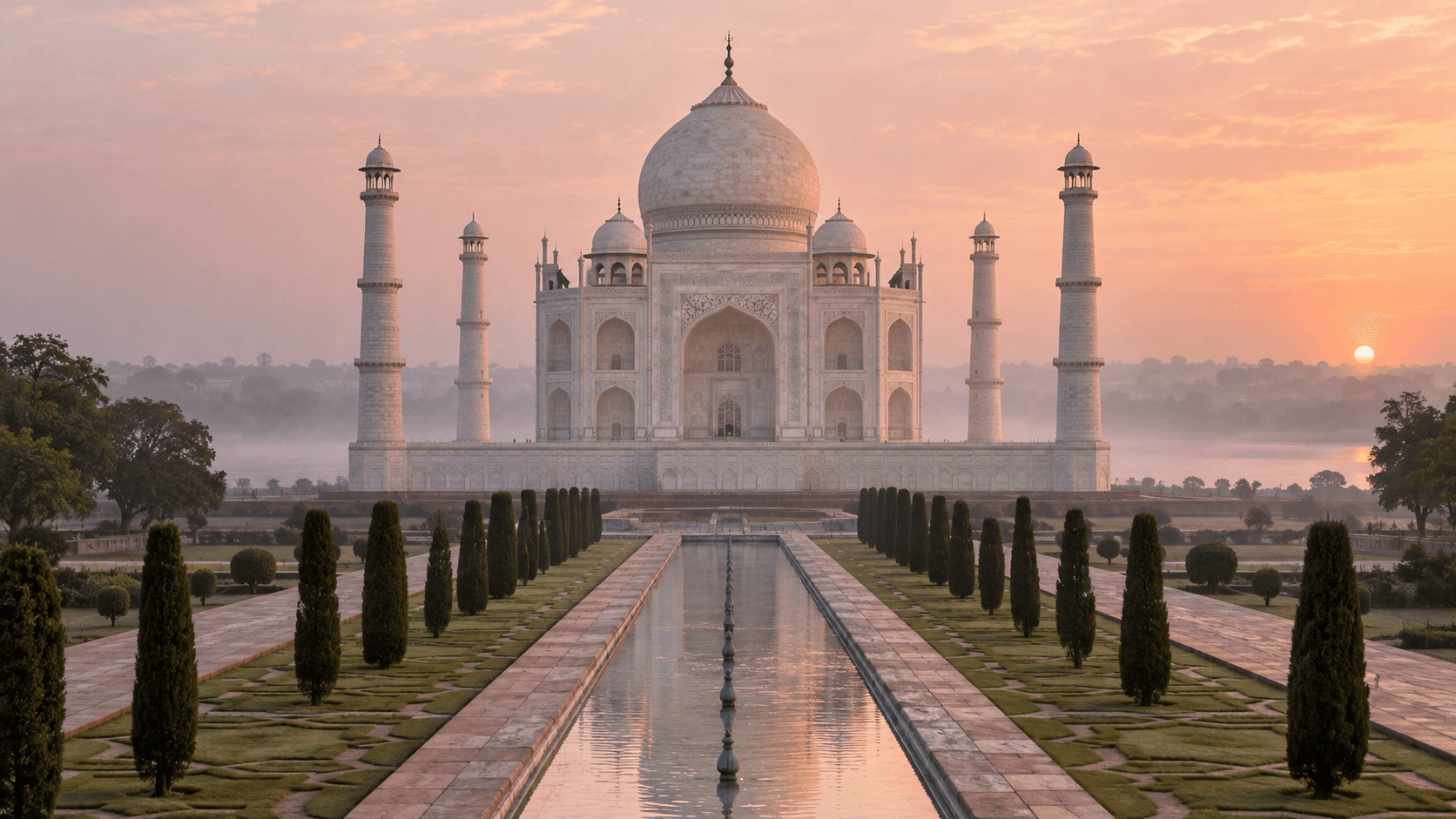
7. The Taj Mahal at sunrise. The marble mausoleum at its softest light. Closed on Fridays.
8. Agra Fort. The red sandstone fort with views of the Taj from its terraces.
9. Mehtab Bagh at sunset. Gardens across the Yamuna facing the Taj.
10. Itmad-ud-Daulah. The "Baby Taj", with delicate inlay work and few crowds.
11. Marble inlay workshops. See pietra dura craft passed down by Agra's artisans.
On the way to Jaipur
12. Fatehpur Sikri. Akbar's abandoned capital, with the Buland Darwaza and Panch Mahal.
13. Chand Baori at Abhaneri. A deep, symmetrical stepwell, a short detour near Jaipur.
Jaipur
14. Amber Fort. A hilltop fort-palace with mirrored halls; go early.
15. City Palace and Jantar Mantar. The royal residence and a UNESCO-listed observatory.
16. Hawa Mahal and the bazaars. The Palace of Winds and markets for textiles and jewellery.
17. Nahargarh at sunset. City views from the hill fort.
18. A Jaipur food walk. Kachoris, lassi and sweets in the old city.
More of Delhi
Delhi has layers of history. The Red Fort, Raj Ghat, the Gurudwara Bangla Sahib with its community kitchen, Hauz Khas village and the National Museum each show a different side. Dilli Haat brings crafts and food from across India, and the evening sound-and-light show at the Red Fort tells the city's story. Delhi's metro makes it easy to reach most sights without traffic.
More of Agra
Beyond the Taj, Agra has the tomb of Akbar at Sikandra, the Chini ka Rauza with its glazed tiles, and the Kinari Bazaar for sweets and petha. A sunset boat on the Yamuna, where permitted, gives a quiet view of the Taj. Staying overnight in Agra allows both a sunrise and a sunset view without rushing.
More of Jaipur
Jaipur offers more than its forts. The Albert Hall Museum, the Panna Meena ka Kund stepwell near Amber, Jal Mahal in Man Sagar Lake and the evening light-and-sound show at Amber Fort fill a second day. Craft workshops for block printing, blue pottery and gem cutting can be arranged with a guide, and a heritage walk through the old city shows daily life in the bazaars.
Best views
The Taj Mahal from the main gate at sunrise, from Mehtab Bagh at sunset and from Agra Fort's terraces; Humayun's Tomb in soft morning light; and Amber Fort from Maota Lake are the classic photographs.
Visiting Fatehpur Sikri
Fatehpur Sikri has two parts: the royal palaces, with a ticket, and the Jama Masjid and Salim Chishti's tomb, free to enter. Hire an official guide at the entrance and decline touts. Allow one and a half to two hours.
A sensible daily rhythm
The Golden Triangle is best enjoyed with early starts and slow afternoons. Visit monuments at opening time, rest in the heat of the day and head out again for sunsets, bazaars and dinners. On travel days, leave after breakfast and break the drive with a stop. Allow extra time for Delhi traffic and fog on winter mornings.
Understanding the Mughal story
The three cities trace the rise of the Mughal empire: Humayun's Tomb in Delhi, Akbar's Fatehpur Sikri and Agra Fort, and Shah Jahan's Taj Mahal and Red Fort. Visiting them in this order, with a good guide, helps the story make sense. Jaipur adds the Rajput side, with Amber Fort built by allies of the Mughals.
Food experiences
Old Delhi's parathas, chaat and jalebis, Agra's petha and Mughlai dishes, and Jaipur's thalis and kachoris are highlights. Vegetarian and Jain food is easy everywhere. A guided food walk in Old Delhi is one of the best ways to enjoy it safely.
When to go
October to March is the main season, with fog on some December and January mornings. April to June is very hot; start sightseeing early.
What you can safely skip
You do not need every Delhi monument. Choose Humayun's Tomb, Old Delhi and Qutub Minar, and save energy for Agra and Jaipur.
Getting between experiences
Fast trains link Delhi with Agra and Jaipur. A car and driver allows stops at Fatehpur Sikri and Abhaneri. In Delhi, the metro is quick.
Shopping
Delhi's Dilli Haat and Khan Market, Agra's marble inlay and Jaipur's textiles and gems are popular. Buy from trusted shops and avoid commission stops.
Free and low-cost experiences
Lodhi Garden, India Gate, the gurudwara, old-city walks and sunset views cost little.
Extensions
Many travellers add Udaipur, Ranthambore or Varanasi. Our Heritage and Royal Splendour with Udaipur and Golden Triangle and Sacred Varanasi show how.
How to choose
With five or six nights, follow Delhi, Agra and Jaipur, as in our Tales and Trails of the Golden Triangle, or explore our Delhi and Jaipur pages.
For families and parents
Children enjoy rickshaw rides and forts; parents may prefer wheelchairs at the Taj, shorter days and a car.
For couples
Couples often favour sunrise at the Taj, sunset at Mehtab Bagh and a palace hotel in Jaipur.
Practical tips
Carry ID, use licensed guides and dress modestly at religious sites. Read our planning guide for more.
A BagPackerMe planner can choose and plan these experiences privately, with one named planner, WhatsApp support throughout and vegetarian and Jain food planned in.
Your questions, answered
What is the one thing not to miss on the Golden Triangle?
The Taj Mahal at sunrise, when the marble glows and crowds are smaller. It is closed on Fridays, so plan your Agra day accordingly.
Which experiences suit families?
Children usually enjoy the Taj Mahal, a cycle-rickshaw ride in Old Delhi, the Jantar Mantar instruments and a jeep ride up to Amber Fort.
Is Fatehpur Sikri worth a stop?
Yes. The abandoned Mughal capital is about an hour from Agra on the way to Jaipur, and a guided visit takes one to two hours.
How many days do I need?
Five to six nights covers Delhi, Agra and Jaipur comfortably, with time for the main sights and some slower evenings.
Join Our Newsletter
Get destination guides, tips, and inspiration delivered straight to your inbox.
Plan it privately
The Golden Triangle, chosen for you
We pick the experiences that suit your group, arrange drivers and guides, and plan the days at a comfortable pace.
Written by
BagPackerMe Editorial Team
Read More
Continue exploring
 Golden Triangle Guides
October 21, 2026•6 min read
Golden Triangle in 7 Days: A Practical Itinerary
Seven days on the Golden Triangle gives Delhi, Agra and Jaipur the time they deserve, with sunrise at the Taj Mahal and room for an extension. Here is a day-by-day route with realistic drive times, what to cut and variations.
Golden Triangle GuidesOctober 14, 2026•6 min read
Golden Triangle Trip Planning Guide: Routes, Seasons and Stays
The Golden Triangle links Delhi, Agra and Jaipur into India's most popular heritage circuit. Here is who it suits, how many nights, the best months, how to travel between the cities and how to extend it.
 Golden Triangle Guides
October 27, 2026•5 min read
How Much Does a Golden Triangle Trip Cost? Budget, Mid-Range and Luxury
A Golden Triangle trip costs most in hotels and a car and driver for the Delhi–Agra–Jaipur loop, with fast trains a cheaper alternative on the Delhi–Agra leg. Monument tickets and guides are modest. Peak winter weeks are the priciest. Here is how the budget breaks down.