
Accessible Travel in Thailand: Planning With Limited Mobility
- Thailand
- Accessible travel
- Limited mobility
- Planning
Accessible travel in Thailand is possible with planning. Major airports offer assistance, newer hotels and malls have lifts and ramps, and private vans make transfers easier. Older streets, temples and beaches are harder. Here is how to plan airports, hotels, transport and attractions for travellers with limited mobility.
Accessible travel in Thailand is possible with planning. Major airports offer assistance, newer hotels and malls have lifts and ramps, and private vans with space for a wheelchair make transfers easier. Older streets, temples, piers and beaches are harder. Choose accessible hotels in central locations, request assistance early, plan short days and travel with a companion where possible.
Travellers with limited mobility, including parents and grandparents using wheelchairs, increasingly visit Thailand. This guide covers what works and what to plan for.
At a glance
| Area | What to expect |
|---|---|
| Airports | Assistance available on request |
| Hotels | Newer hotels more likely to have accessible rooms |
| City streets | Uneven pavements, high kerbs |
| Skytrain and metro | Lifts at some stations |
| Temples | Steps and uneven ground at many |
| Beaches | Soft sand; few beach wheelchairs |
Airports
Request wheelchair assistance through your airline when you book and confirm it before flying. Bangkok's Suvarnabhumi and Don Mueang and Phuket's airport offer assistance from the aircraft through immigration to the arrivals hall. Our Bangkok airport guide explains the layout.
Hotels
Newer international hotels are more likely to have accessible rooms with roll-in showers and grab rails. Book early, as there are often only a few. Choose central locations so that sights, malls and restaurants are a short drive away.
Getting around
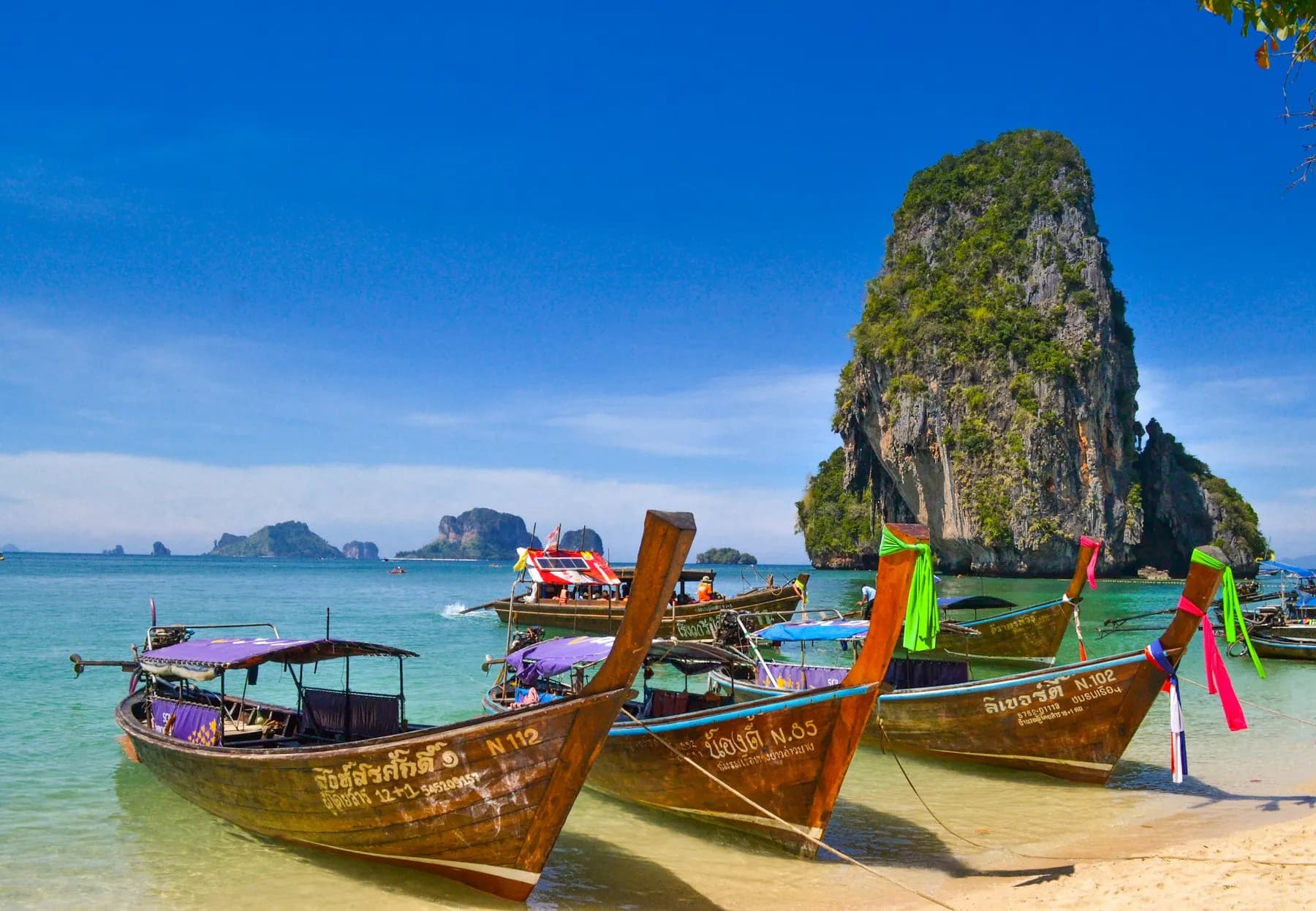
Private vans with space for a folded wheelchair are the most practical choice for transfers and sightseeing. Some Skytrain and metro stations have lifts, but not every exit does. River boats and long-tail boats involve steps and moving piers, so they can be difficult. Our getting around guide has more.
Attractions
Malls, aquariums, some museums and many modern attractions are step-free. Large temples such as the Grand Palace have long walks, uneven surfaces and steps, so plan a shorter visit with a companion. Some viewpoints and observation decks are reached by lift.
Beaches and islands
Beach access is harder, with soft sand and few boardwalks. Choose a beachfront hotel with a step-free path to a terrace or pool facing the sea. Speedboat transfers to islands involve boarding from the beach or a pier, which can be difficult.
Travelling with a companion
A companion makes kerbs, steps and boarding easier. Some travellers hire a local guide who can help with logistics.
Medical needs
Carry prescriptions, spare equipment parts and a letter from your doctor. Check the rules for medicines on the Thai Food and Drug Administration site.
Pace
Plan one main outing each day with rest in between. Short trips with fewer hotel changes work best.
Planning checklist
- Request airport assistance through your airline.
- Ask hotels for photos of accessible rooms and bathrooms.
- Book a private van with space for the wheelchair.
- Check access at each sight in advance.
- Carry spare parts, charger adapters and repair contacts.
- Buy insurance that covers your equipment and medical needs.
Electric wheelchairs and scooters
If you travel with a powered wheelchair or scooter, contact your airline well in advance about battery type and handling. Carry documentation for the battery, and check that your hotel has a suitable place to charge it. Thailand uses mainly 220-volt sockets, so bring adapters.
Places that work well
Bangkok's malls, riverside hotels and modern attractions are among the easiest areas. In Phuket and Krabi, choose resorts with level paths and lifts. Chiang Mai's Old City has uneven pavements, so plan drives between temples. Our guide for travelling with parents has more ideas.
Accessible toilets
Accessible toilets are found in airports, malls, newer hotels and some attractions, but are less common in temples, markets and smaller restaurants. Plan breaks around malls and hotels.
A sample plan
Spend three nights in Bangkok at a riverside or Sukhumvit hotel with an accessible room, visiting malls, a river cruise from an accessible pier and one temple with a guide. Then fly to Phuket for three nights at a resort with level paths, sea views and a pool hoist if available. Ask about pool hoists in advance.
River cruises
Some dinner cruises on the Chao Phraya leave from hotel piers with ramps. Ask whether boarding is step-free before booking.
Budget
Accessible rooms, private vans and guides can add to costs, but they make the trip possible and far more comfortable. Book early to secure accessible rooms at the best rates, and compare complete plans rather than individual prices.
Islands and ferries
Island hopping is harder, as speedboats and ferries often involve steps, moving pontoons or wading from the beach. If you want an island, choose one reached by bridge or flight, such as Phuket, or a resort with its own accessible pier.
Weather
Heat and humidity can be tiring. The cool season from November to February is easiest. In the rainy season, wet surfaces and puddles make pavements harder, so allow more time.
Support on the trip
A named contact who knows your needs helps if a transfer is late or a room is not as described. Our planners stay on WhatsApp throughout.
What to leave out
Leave out long-tail boat trips, steep viewpoints, crowded night markets and island hopping by speedboat. Focus on fewer places, comfortable hotels and sights with good access. A slower trip with rest days is usually the most enjoyable.
Who this suits
This approach suits wheelchair users, older travellers who tire easily, people recovering from injury and families with a member who has limited mobility. A planner who asks the right questions of hotels and drivers before you arrive saves stress later. Share your needs in detail, including transfer heights and bathroom requirements.
When to go
The cool season from November to February is the most comfortable time, with lower heat and less rain, which makes pavements, ramps and transfers easier for everyone in the group.
In short
Thailand is manageable with limited mobility if you request airport assistance, choose accessible hotels in central areas, use private vans and plan short, focused days.
Entry requirements
Before you fly, check the current entry requirements for Indian passport holders on the Royal Thai Embassy, New Delhi page and the Thai e-Visa site, and complete the Thailand Digital Arrival Card on the official Thailand Digital Arrival Card site. Rules change, so confirm them close to your travel date.
Next steps
Read our Thailand with parents guide, or see our Bangkok page.
A BagPackerMe planner can plan your Thailand trip privately, with one named planner, WhatsApp support throughout and vegetarian and Jain food planned in.
Your questions, answered
Is Thailand wheelchair friendly?
Partly. Airports, newer hotels, malls and some attractions are accessible, while older streets, pavements, temples and beaches are harder. Planning makes a big difference.
Do Thai airports offer wheelchair assistance?
Yes, major airports offer assistance. Request it through your airline when booking and confirm it a few days before you fly.
How do I get around Bangkok with a wheelchair?
Private vans are the most practical. Some Skytrain and metro stations have lifts, but not all exits do. Taxis may not fit folding chairs easily.
Can I visit temples with limited mobility?
Some temples have ramps or level areas, but many have steps and uneven ground. Plan short visits with a companion and check access in advance.
Join Our Newsletter
Get destination guides, tips, and inspiration delivered straight to your inbox.
Plan it privately
Thailand, planned for your mobility
We check rooms, transfers and sights against your needs and plan a pace that works.
Written by
BagPackerMe Editorial Team
Read More
Continue exploring
 Thailand Guides
October 5, 2026•7 min read
Taking Your Parents to Thailand: A Gentle-Pace Guide
Thailand is one of the easiest international trips for Indian parents — if the route has fewer hotel changes, short transfers, lifts, vegetarian meals and real rest built in.
 Thailand Guides
November 12, 2026•5 min read
Suvarnabhumi or Don Mueang: Bangkok Airport Guide for Indians
Bangkok has two airports: Suvarnabhumi (BKK) for most full-service airlines and Don Mueang (DMK) for many low-cost carriers. Here is which airlines use which, how to get into the city by rail, taxi or private transfer, what to do on late arrivals, and how to connect between the two.
Thailand GuidesNovember 12, 2026•5 min read
Getting Around Thailand: Flights, Trains, Ferries and Transfers
Getting around Thailand is easy with the right mix: short domestic flights between regions, the overnight train to Chiang Mai for something different, ferries and speedboats to the islands, ride-hailing apps in cities and private transfers for families. Here is how each works for Indian travellers.