Getting Around Thailand: Flights, Trains, Ferries and Transfers
- Thailand
- Transport
- Domestic flights
- Trains
- Ferries
Getting around Thailand is easy with the right mix: short domestic flights between regions, the overnight train to Chiang Mai for something different, ferries and speedboats to the islands, ride-hailing apps in cities and private transfers for families. Here is how each works for Indian travellers.
Getting around Thailand is easy with the right mix. Use short domestic flights between Bangkok, Chiang Mai and the beaches, the overnight train to Chiang Mai for something different, ferries and speedboats to the islands, Grab or Bolt in cities, and private transfers for families and parents. Plan buffers around ferries and weather.
Thailand's transport is well developed and affordable, but distances are larger than many visitors expect. Choosing the right mode for each leg saves time and stress. This guide covers each option, with tips for Indian travellers.
Transport options at a glance
| Mode | Best for | Notes |
|---|---|---|
| Domestic flights | Bangkok to Chiang Mai, Phuket, Krabi, Samui | Fast; check baggage rules |
| Overnight train | Bangkok to Chiang Mai | Sleeper berths; book ahead |
| Ferries and speedboats | Island hopping | Weather-dependent |
| Grab and Bolt | City trips | Fixed prices in the app |
| Private transfers | Families, parents, airports | Door to door |
| BTS and MRT | Bangkok | Avoids traffic |
Domestic flights
Domestic flights link Bangkok with Chiang Mai, Chiang Rai, Phuket, Krabi, Koh Samui and other cities in about one to one and a half hours. Low-cost carriers often fly from Don Mueang, full-service airlines from Suvarnabhumi. Check baggage allowances, which can be lower on budget fares. Our Bangkok airport guide explains the two airports.
The overnight train to Chiang Mai
Sleeper trains run between Bangkok and Chiang Mai, taking around twelve hours or more. Berths are comfortable, with bedding, and the journey passes rice fields and hills. Book through the official State Railway of Thailand or authorised agents, especially in peak season. Bangkok's main long-distance trains now leave from Krung Thep Aphiwat Central Terminal.
Ferries and speedboats
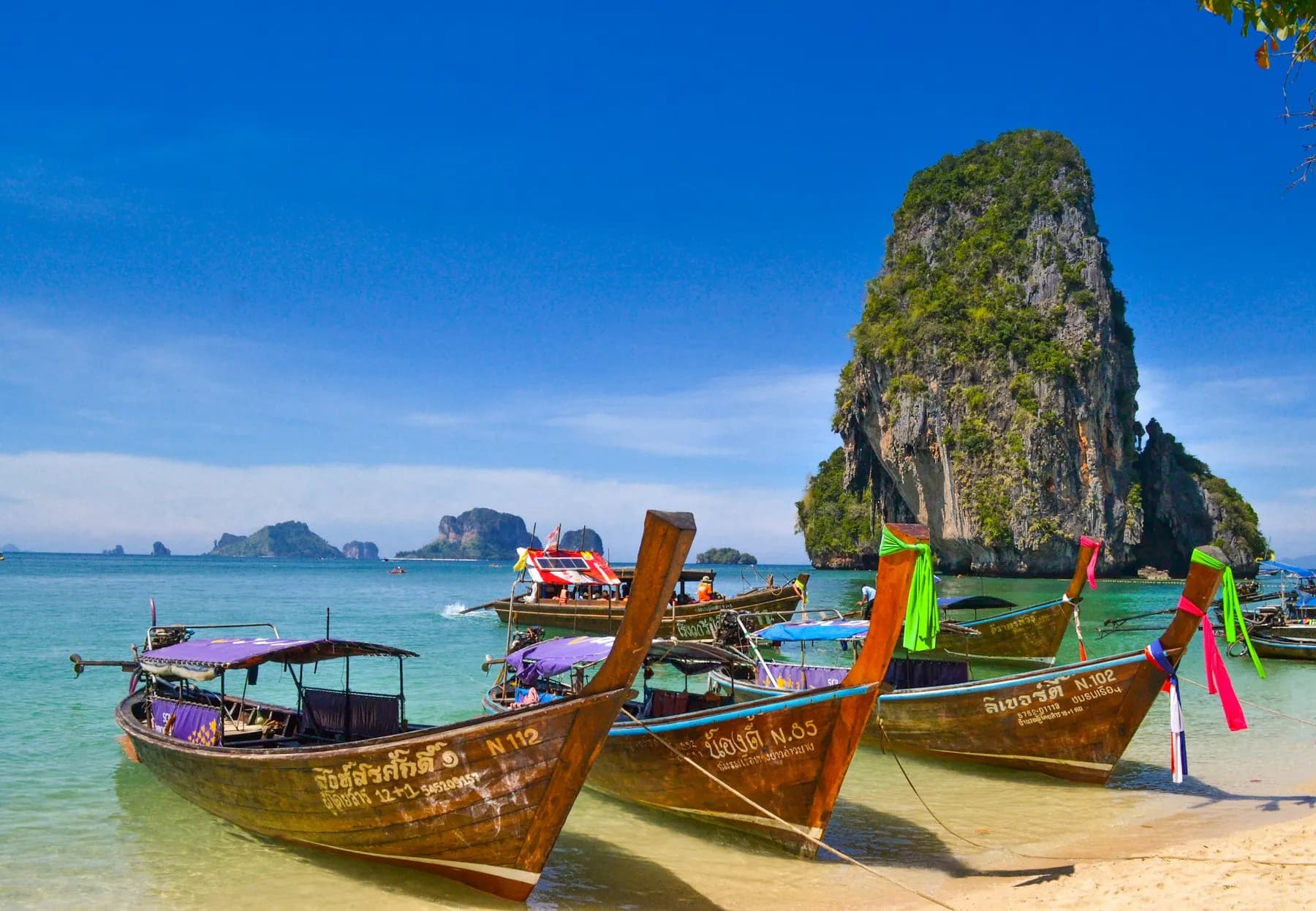
Ferries link Krabi, Phuket, Phi Phi and Koh Lanta on the Andaman coast, and Surat Thani with Koh Samui, Koh Phangan and Koh Tao on the Gulf. Larger ferries are steadier; speedboats are faster but bumpier. Life jackets should be provided; ask if not.
Getting around cities
In Bangkok, the BTS Skytrain and MRT avoid traffic, and river boats serve the Old Town. Grab and Bolt work in major cities, with prices fixed in the app. Metered taxis are common in Bangkok; insist on the meter.
Tuk-tuks and songthaews
Tuk-tuks are fun for short trips; agree the price before getting in. Songthaews, shared pick-up trucks, run fixed routes in Chiang Mai, Pattaya and the islands.
Scooters
Scooters are widely rented, but accidents are common, and many insurance policies exclude them without a valid licence and helmet. Our travel insurance guide explains the risks.
Private transfers
For families, parents and groups with luggage, private transfers between airports, hotels and piers are the easiest option, and often good value when shared.
Buses
Long-distance buses link most cities and are cheaper than flights, but slower. VIP buses have reclining seats.
Planning your route
Plan routes in a line to avoid backtracking, such as Bangkok to Chiang Mai to Phuket, flying home from the last base. Our 10-day Thailand itinerary shows an example.
Getting around Bangkok
The BTS Skytrain and MRT underground are the fastest way around central Bangkok, avoiding traffic. Rabbit cards or contactless payments work on many lines. Chao Phraya river boats link the Old Town, Chinatown and riverside hotels. Grab and Bolt are useful for door-to-door trips, but avoid rush hours on the roads.
Getting around Chiang Mai
In Chiang Mai, red songthaews (shared pick-ups) run around the city, and Grab and Bolt are available. For day trips to Doi Suthep, Doi Inthanon or Chiang Rai, a car with a driver is easiest.
Getting around the islands
On Phuket and Koh Samui, taxis, Grab and hotel cars are the main options, as distances between beaches can be large. On smaller islands, longtail boats and songthaews link beaches.
For families and parents
Families and parents are better served by flights and private transfers than long bus or train journeys. Book cars with enough space for luggage, and child seats if needed, which are not standard.
Costs
Domestic flights booked early are often good value, while private transfers cost more but save time. Grab prices are shown before booking, which avoids disputes.
Choosing ferries
On the Andaman coast, ferries from Phuket and Krabi reach Phi Phi in about one and a half to two hours, and Koh Lanta in a little longer. On the Gulf, ferries from Donsak near Surat Thani reach Koh Samui in about one and a half hours. Larger car ferries are slower but steadier; speedboats and catamarans are faster but can be uncomfortable in choppy seas. Book combined bus-and-boat tickets through reputable agents, and keep valuables with you.
Other train journeys
Besides the Chiang Mai line, trains run south to Hua Hin and Surat Thani and east towards the Cambodian border. Day trains are slow but scenic; the line from Bangkok to Ayutthaya makes an easy day trip.
Useful apps
Grab and Bolt for rides and food delivery, map apps for public transport, and ferry or bus booking apps for the islands. Download them before you travel, and add a payment card.
Road safety
Thai roads can be busy and fast. Wear seatbelts in cars, choose reputable drivers, and avoid long night drives, especially in rain.
Bangkok to Pattaya and Hua Hin
Pattaya is about two hours from Bangkok by road and Hua Hin about three. Private transfers are easiest; buses and minivans are cheaper. Trains reach Hua Hin slowly but scenically.
Chiang Mai to Chiang Rai
Chiang Rai is about three hours from Chiang Mai by road, with buses and private cars. Many travellers visit on a long day trip, but an overnight stay is gentler.
Luggage between bases
Travel light if you plan several flights and ferries. Some hotels store bags while you visit islands, which is useful on longer trips.
Entry requirements
Before you fly, check the current entry requirements for Indian passport holders on the Royal Thai Embassy, New Delhi page and the Thai e-Visa site, and complete the Thailand Digital Arrival Card on the official Thailand Digital Arrival Card site. Rules change, so confirm them close to your travel date.
Next steps
Read our 10-day itinerary and airport guide, or see our Chiang Mai page.
A BagPackerMe planner can plan your Thailand trip privately, with one named planner, WhatsApp support throughout and vegetarian and Jain food planned in.
Your questions, answered
What is the best way to travel between regions in Thailand?
Domestic flights are fastest between Bangkok, Chiang Mai, Phuket, Krabi and Koh Samui. Trains and buses are slower but cheaper.
Is the overnight train to Chiang Mai worth it?
Yes, for travellers who enjoy rail journeys. Sleeper berths make it a comfortable overnight trip, but it takes much longer than flying.
Can I use Grab in Thailand?
Yes. Grab and Bolt work in Bangkok, Phuket, Chiang Mai, Pattaya and other cities, with car and taxi options.
How do I reach the islands?
Ferries and speedboats link the mainland with the islands, and Koh Samui has an airport. Book with reputable operators, and allow buffer time for weather.
Join Our Newsletter
Get destination guides, tips, and inspiration delivered straight to your inbox.
Plan it privately
Thailand, door to door
We book domestic flights, ferries and private transfers that suit your group, and plan hotels and vegetarian meals.
Written by
BagPackerMe Editorial Team
Read More
Continue exploring
 Thailand Guides
November 11, 2026•6 min read
Thailand in 10 Days: North to South Without Rushing
Ten days in Thailand is enough to go north to south without rushing: Bangkok, Chiang Mai's temples and hills, and one island or beach base, linked by short domestic flights, with rest days built in. Here is the route, the order and the timing for Indian travellers.
 Thailand Guides
November 12, 2026•5 min read
Suvarnabhumi or Don Mueang: Bangkok Airport Guide for Indians
Bangkok has two airports: Suvarnabhumi (BKK) for most full-service airlines and Don Mueang (DMK) for many low-cost carriers. Here is which airlines use which, how to get into the city by rail, taxi or private transfer, what to do on late arrivals, and how to connect between the two.
 Thailand Guides
November 12, 2026•6 min read
Flights to Thailand From India: Routes, Airports and Timing
Flights from India to Thailand are short: about three to five hours from the main metros. Direct routes reach Bangkok's Suvarnabhumi and Don Mueang airports, with some direct flights to Phuket and Krabi. Here is how to choose routes, airports and timings, including red-eye trade-offs and baggage rules.