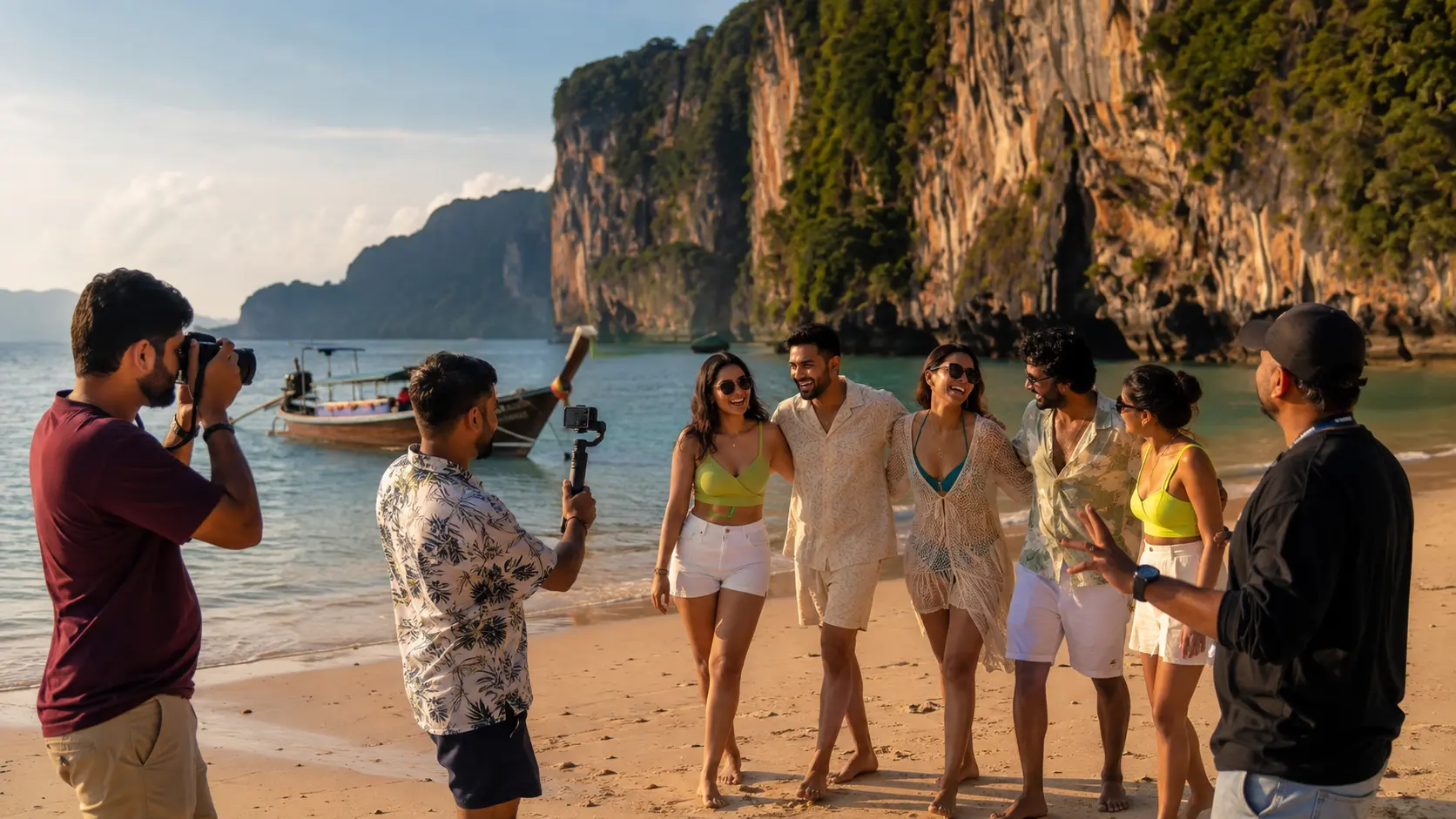
I Want to Travel, But I Have No One to Go With: A Guide for Indian Travellers
- Travel companions
- Solo travel
- Group travel
- Travel communities
Your friends are busy, your partner is not interested, and you still want to go. Here is a practical way to decide what to do next without putting your travel life on hold.
Yes, you can still travel when you do not have someone ready to come with you. Your best next step depends on whether you want solitude, shared logistics, new people, or simply permission to stop waiting for everyone’s calendar to line up. A solo trip, a well-chosen group trip, a travel community and a smaller first experiment can all work; the right one is the option that matches your confidence and the kind of trip you actually want.
This problem is more common than people admit. A friend may be saving for something else. A partner may have different leave dates. Your closest people may enjoy holidays, but not the kind of journey you are craving. None of that means your curiosity needs to be paused indefinitely.
First, name what you are actually missing
“I have nobody to travel with” can mean several different things. You may want somebody to split taxi costs with, someone to take a photo without making it awkward, company at dinner, a person to navigate a new country with, or simply reassurance that you will not feel out of place. Those needs call for different solutions.
It also helps to separate companionship from permission. If the main obstacle is that you have never travelled alone before, a short domestic break or a structured group departure can be a better first move than cancelling a bigger dream. If the obstacle is a particular destination that feels intimidating alone, build support around the trip rather than abandoning it.
Your real options when your usual people cannot come
There is no single brave or correct choice. The most useful option is the one that lowers the risk you genuinely feel while keeping the experience recognisably yours.
| Option | Best when | Watch for |
|---|---|---|
| Go solo | You want full control over pace, budget and quiet time. | You need to handle every decision and moment of uncertainty yourself. |
| Join an organised group | You want company and shared logistics without recruiting friends. | Check group size, rooming, inclusions and how much free time exists. |
| Travel through a community | You want the people and the trip to matter equally. | Understand how membership, applications and departure selection work. |
| Start small | The idea of a long or international trip feels like a leap. | Choose a weekend or nearby city that still tests the feeling you are worried about. |
A solo journey is not a test you must pass before you are “allowed” to join a group. Likewise, a group trip is not a failure of independence. They are different travel formats with different trade-offs. Solo travel versus group travel is worth reading before you decide which trade-off feels right for this trip.
When a solo trip is the right first step
Going alone can be the cleanest choice when what you truly want is control. You choose the hotel, the food, the start time, the budget and whether a museum gets forty minutes or four hours. You are not waiting for a group decision, and you do not need to turn every quiet moment into a social opportunity. For some people, that freedom is the whole point.
It is also sensible to make the first solo trip deliberately small. Pick a familiar city, a well-connected destination, a stay with a staffed reception, and an itinerary that has one or two anchors rather than a packed schedule. Arrange your arrival transfer or first-night directions before you leave. Tell someone you trust where you are staying. Those choices are not a sign that you are bad at solo travel; they are what thoughtful independence looks like.
A solo trip can teach you which kind of company you miss. Perhaps you enjoy daytime independence but want shared dinners. Perhaps logistics feel easy but you want someone to laugh with on the long transfer. That information is useful for your next choice. It may lead you to a smaller group experience, a community event before a longer departure, or a future trip with a friend whose rhythm actually matches yours.
How to look for travel company without rushing into a risky plan
Do not put a vague “anyone want to travel?” message on the internet and hand your holiday to the first person who replies. Start closer to the trip itself. A friend-of-a-friend may be interested in the same music festival. A colleague may want a three-day break but not a ten-day international route. A structured day experience can help you learn whether you enjoy travelling alongside new people before you share flights or rooms.
When you meet a possible travel companion, talk about practical things before chemistry. What is the realistic budget? Do you like early starts or slow mornings? Are you comfortable splitting rooms? How do you deal with a missed train, a change of plan or an expense that feels unfair? You do not need a contract for a weekend, but you do need enough clarity that a small difference does not become a big surprise abroad.
A transparent organised group can lower some of that risk because the route, point of contact and terms are set before the people meet. It is still your responsibility to read those details, protect your personal information and decide whether the group energy suits you. For a more specific checklist, read how to find people to travel with in India. For the human side of entering a new group, read what travelling with strangers is actually like.
How to choose a group trip when you are travelling alone
A good group does not need to promise instant best friends. It needs to be clear about what it is offering. Look for an itinerary that tells you how people move between places, what is included, how rooms work, which meals are shared and what happens when plans change. Vague language about “like-minded people” is not enough on its own.
Ask yourself whether the social rhythm fits you. A high-energy itinerary with late nights may be perfect for one person and exhausting for another. A large coach group can be easy for logistics but make genuine connection harder. A smaller, curated departure can offer more conversation but may suit only people who actively want that kind of social setting.
- Match the trip to your real energy. Look at early starts, travel days, nightlife, activity level and the amount of unstructured time—not only the photos.
- Understand the sleeping arrangement. Ask whether the price is based on sharing, whether you can request a room upgrade, and how any matching is handled.
- Read what is not included. Flights, visas, meals, local spending and insurance change the real cost and your independence on the road.
- Look for human accountability. There should be a reachable organiser, a clear cancellation policy and a way to ask practical questions before you pay.
If you are considering a group for the first time, use our guide to choosing a group trip as a solo traveller as a booking checklist, not a sales pitch.
Travelling with strangers without handing over your judgment
Meeting new people does not require you to become careless. Keep your passport, payment cards, medication and return details under your own control. Share your broad itinerary with someone you trust at home. Choose an organiser with a public identity, written terms and a way to contact a real person. If a situation feels wrong, you are allowed to step away without making it a group discussion.
Socially, boundaries matter too. You can join the first dinner and skip the late-night plan. You can have a quiet morning. You can say no to an activity. The point of a good group is not to make everyone behave the same way; it is to make the trip easier to enter, while leaving people room to be themselves.
What if everyone already knows each other?
It can happen, and it does not automatically mean you will be outside the group. Notice whether the organiser creates low-pressure moments where people can talk across existing friendships: a shared meal, a small activity, a walk, a practical briefing. You do not need a forced icebreaker every hour. You do need enough natural openings that you are not left to invent every conversation alone.
Build support around the trip instead of waiting for a perfect companion
Support does not have to mean another person joins every part of the journey. It can mean arriving in daylight, booking the first night somewhere easy to find, saving an offline map, keeping the address of your stay in more than one place, and knowing how you will get from the airport or station to your hotel. It can mean choosing a route with fewer unnecessary hotel changes, or booking an activity with a recognised local operator for the day you feel least certain about. These are practical choices, not signs that you are incapable of travelling independently.
Try to identify the one or two moments that make you hesitate most. For one traveller, it is landing late in a city they have never seen. For another, it is eating alone every evening. For someone else, it is spending a long travel day trying to work out a new transport system. Build a response around that specific moment. A planned transfer, a group departure, a hotel in a walkable area, or a shared activity can remove the pressure without turning the whole trip into something you do not want.
It is also fair to choose a trip with a little more structure the first time and less structure later. Confidence is not a fixed personality trait. It grows when you make one decision, see that you can handle it, and use what you learned to choose the next one more deliberately.
- Choose one anchor for arrival. Know where you are sleeping on night one and how you will get there before you leave home.
- Keep the essentials independent. Your documents, money, medication and route home should remain accessible to you even when you are travelling with others.
- Plan one social opening. A food walk, group activity or dinner reservation can be enough; you do not need a full social calendar.
- Leave one easy exit. A free morning, a quiet meal or a solo walk makes a group experience more sustainable when you need time to reset.
Make a plan this week instead of waiting indefinitely
Choose one destination or kind of experience you would still want even if nobody from your current circle could join. Give it a rough date window and a realistic budget range. Then compare two options: one you could do independently and one with more structure. This turns a vague disappointment into a decision you can actually make.
If Thailand is on your mind, start with our first-time Thailand guide for Indian travellers. If your bigger question is how new travel friendships work in practice, read what travelling with strangers is actually like. The right strangers do not replace your old friends; they can simply make the next story possible.
Common questions
Can I join a group trip alone?
Yes. Many group trips are designed for people joining independently. Choose based on pace, group size, transparency and how comfortable the social format feels to you.
Is it safe to travel with people I do not know?
It can be, provided you choose a legitimate organiser, read the terms, understand rooming and transport arrangements, keep your own documents and money secure, and feel free to step away from any social situation that makes you uncomfortable.
What if I am introverted?
You do not need to be the loudest person in a group. Curiosity, basic openness and respectful boundaries matter more than being loud. Look for a trip that has free time as well as shared moments.
Join Our Newsletter
Get destination guides, tips, and inspiration delivered straight to your inbox.
Group travel, thoughtfully
Travel can begin before your whole friend group is free.
The Curious Club is for people who care about the people, stories and experiences around a trip—not just the destination.
Written by
BagPackerMe Editorial Team
Read More
Continue exploring
 Travel Confidence
June 24, 2026•7 min read
Solo Travel vs Group Travel: Which One Is Actually Right for You?
Solo travel and group travel solve different problems. Use this comparison to choose the format that fits your trip, not the one that looks most impressive online.
Travel ConfidenceJuly 1, 2026•7 min read
How to Find People to Travel With in India
Finding people to travel with is less about collecting strangers online and more about choosing a setting where expectations, pace and safety are clear from the start.
 Group Travel
July 8, 2026•8 min read
Travelling With Strangers: What Is It Actually Like?
The first hour may feel awkward. The rest depends on the setting, the people and whether a group gives you room to be yourself. Here is the unfiltered version.